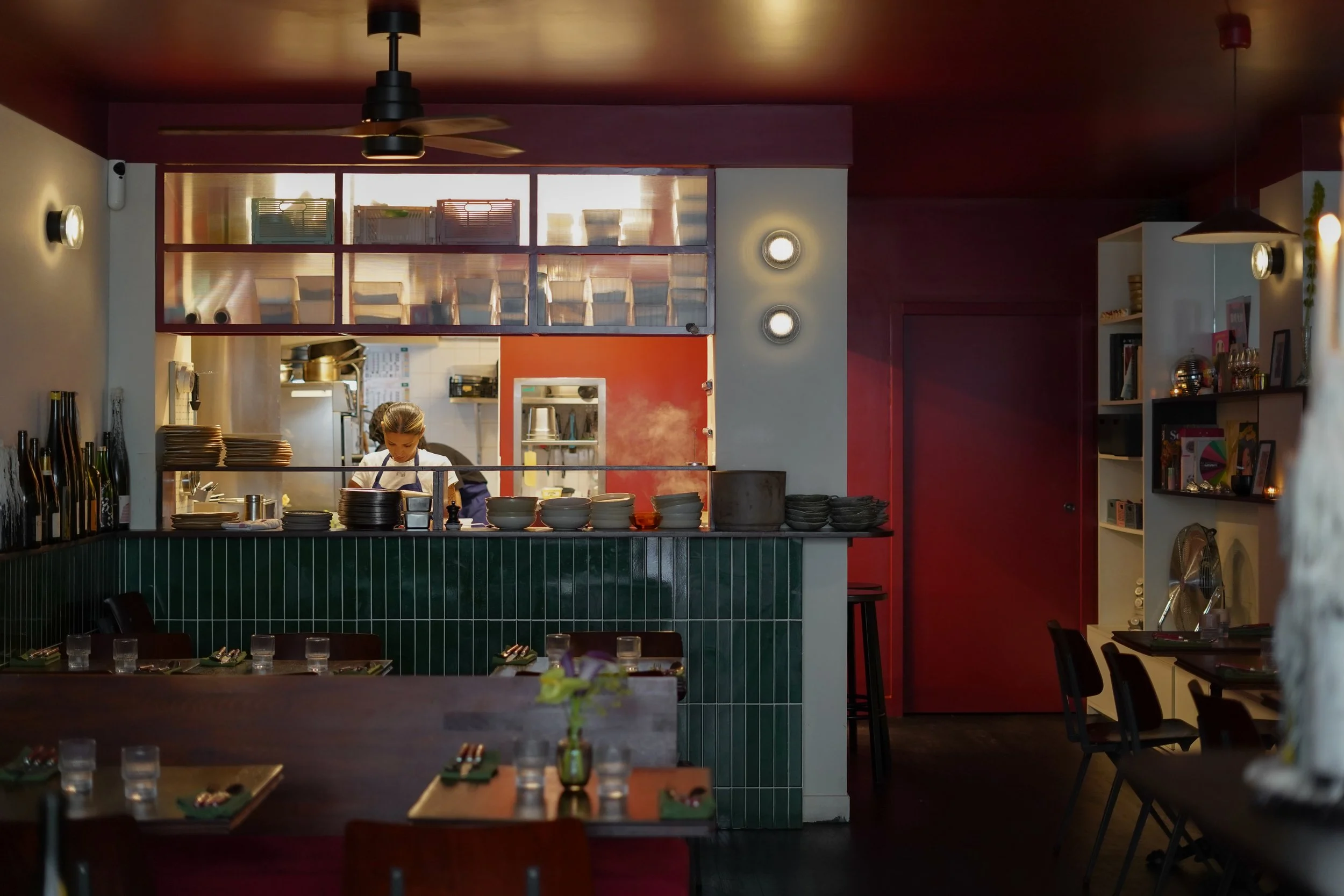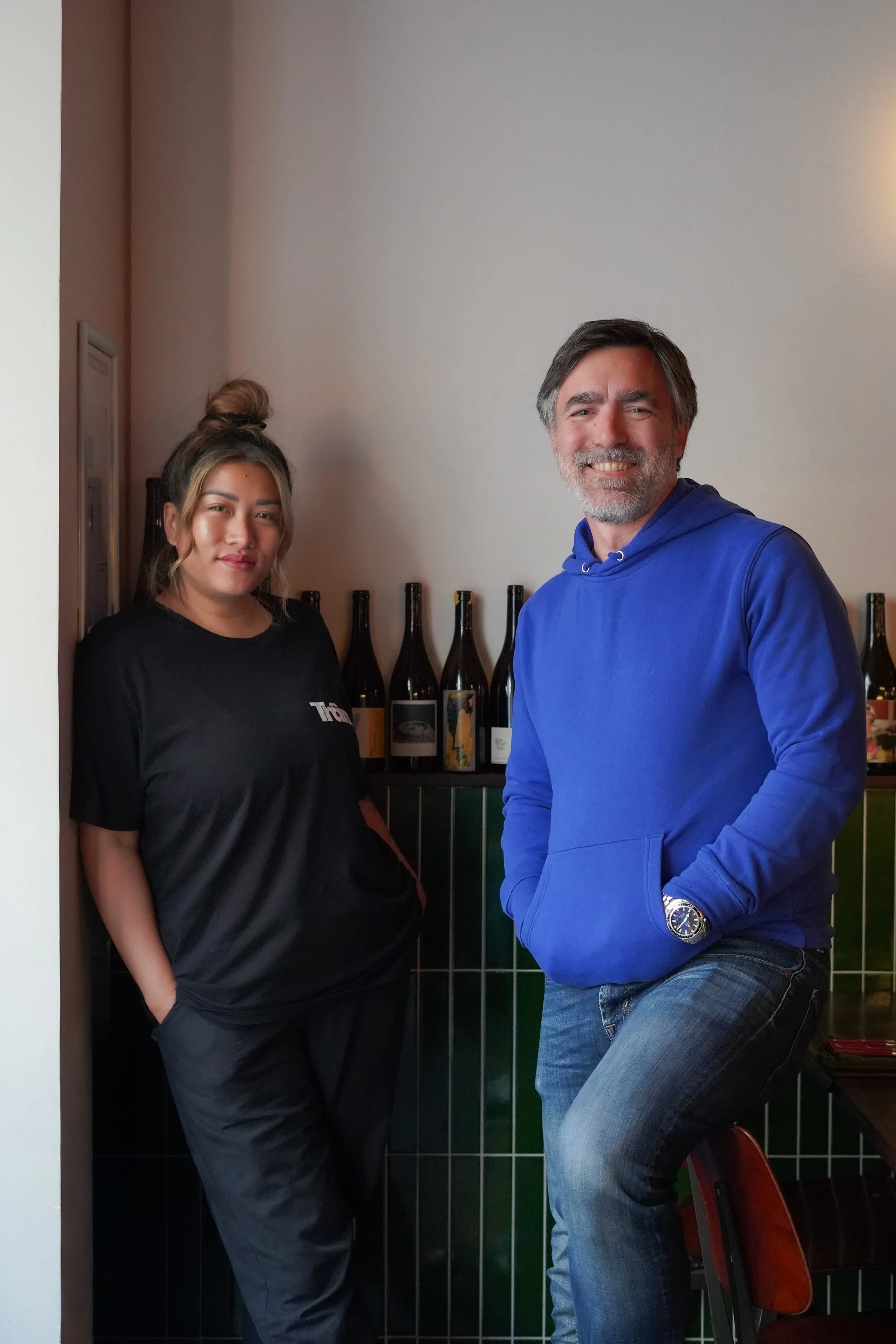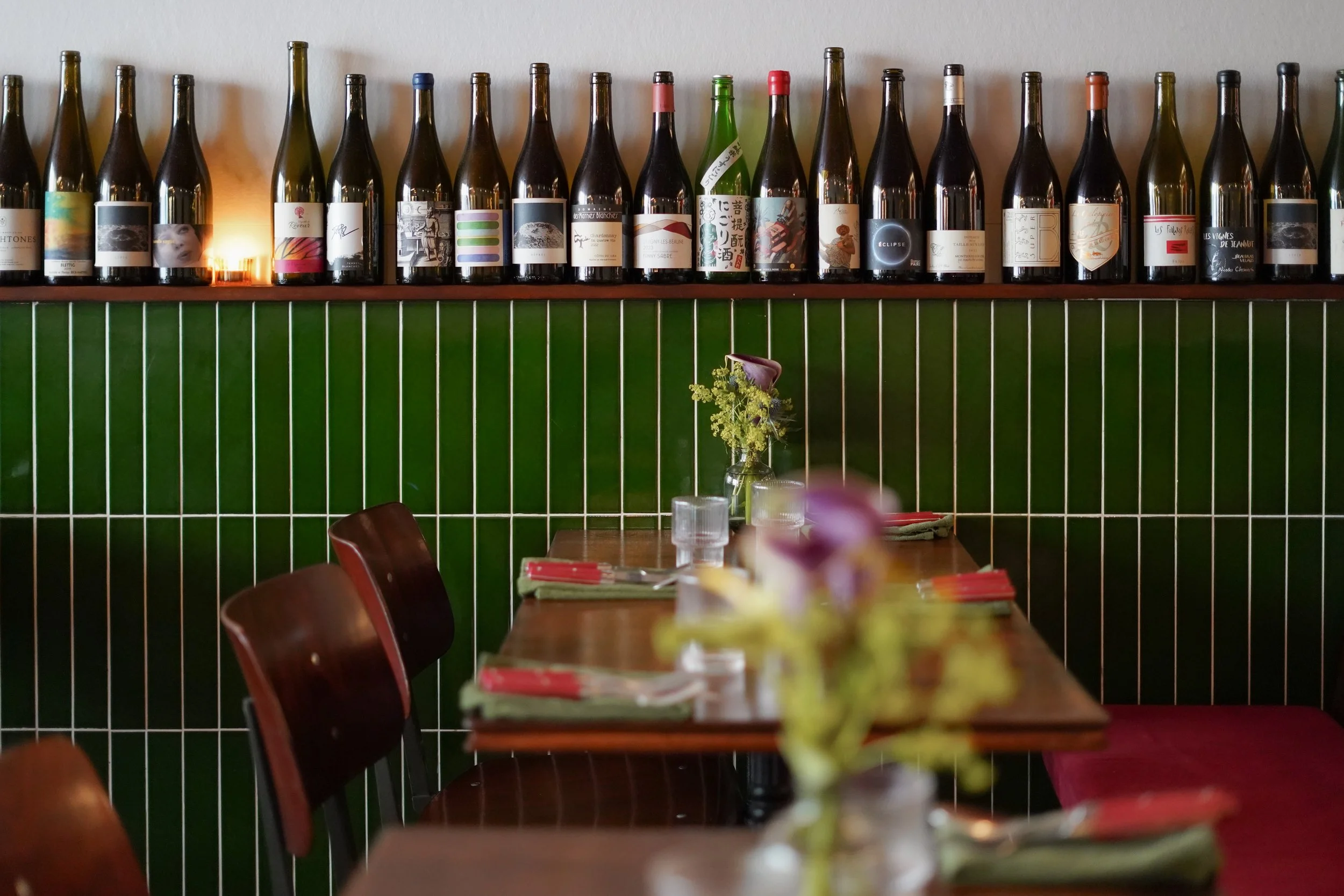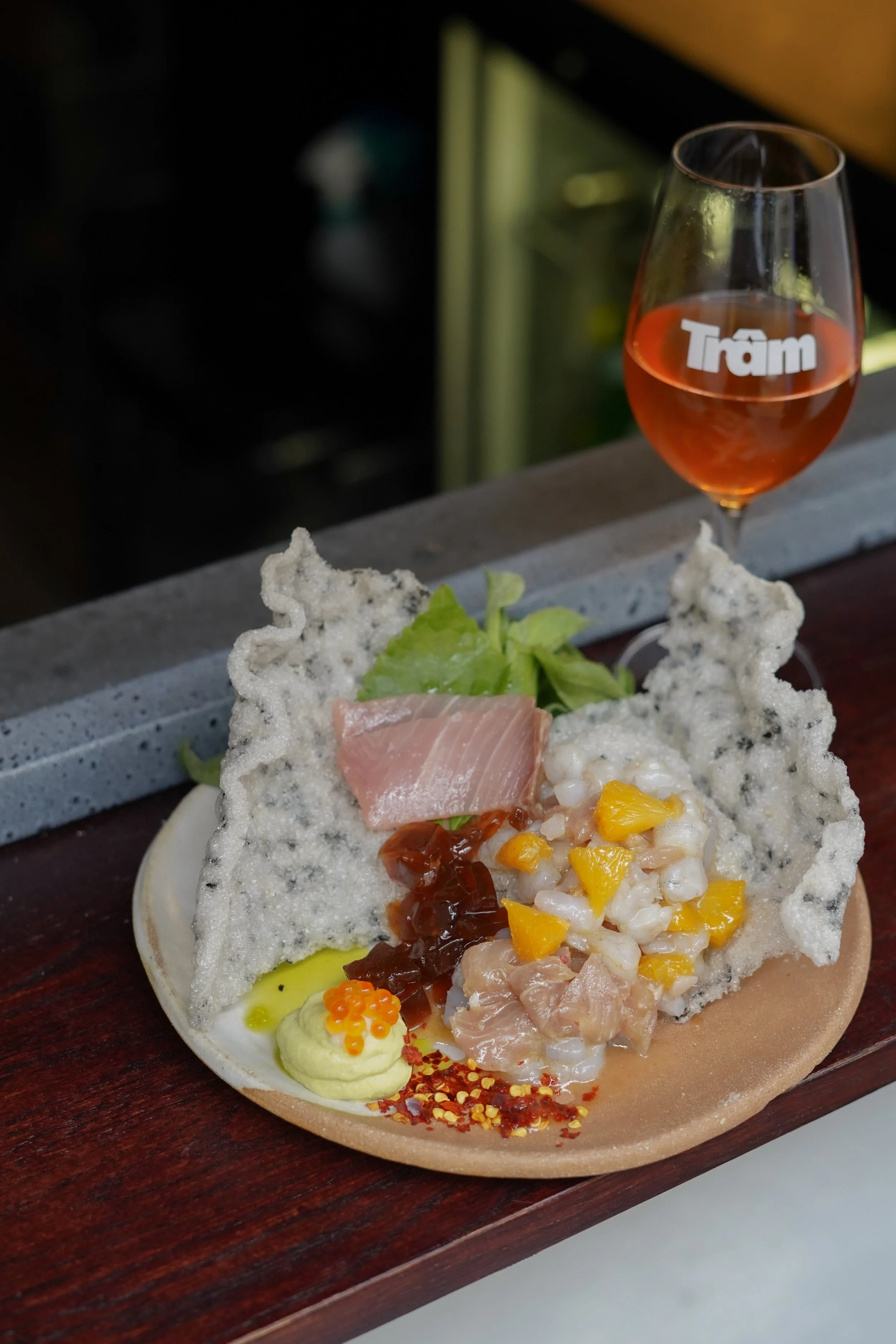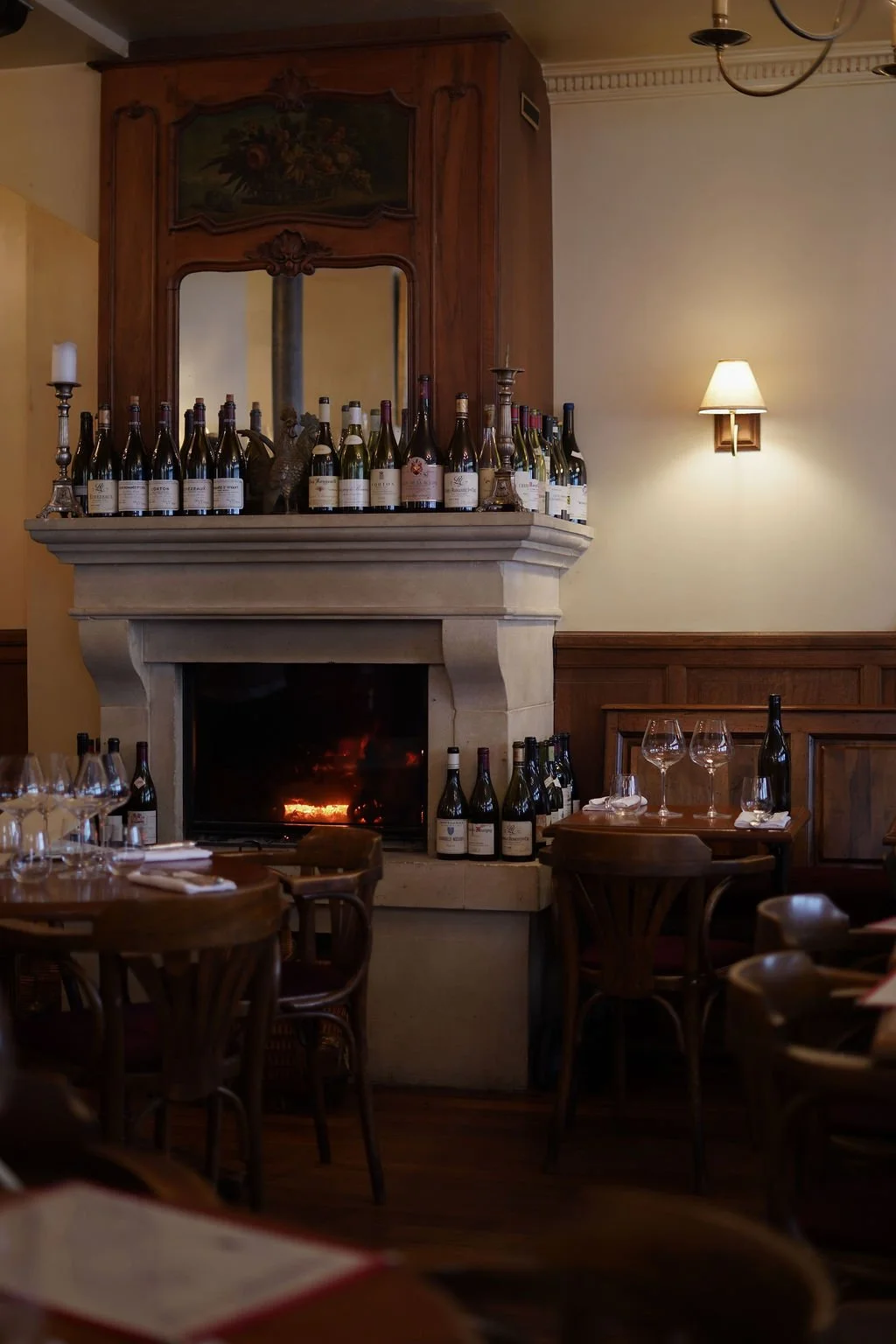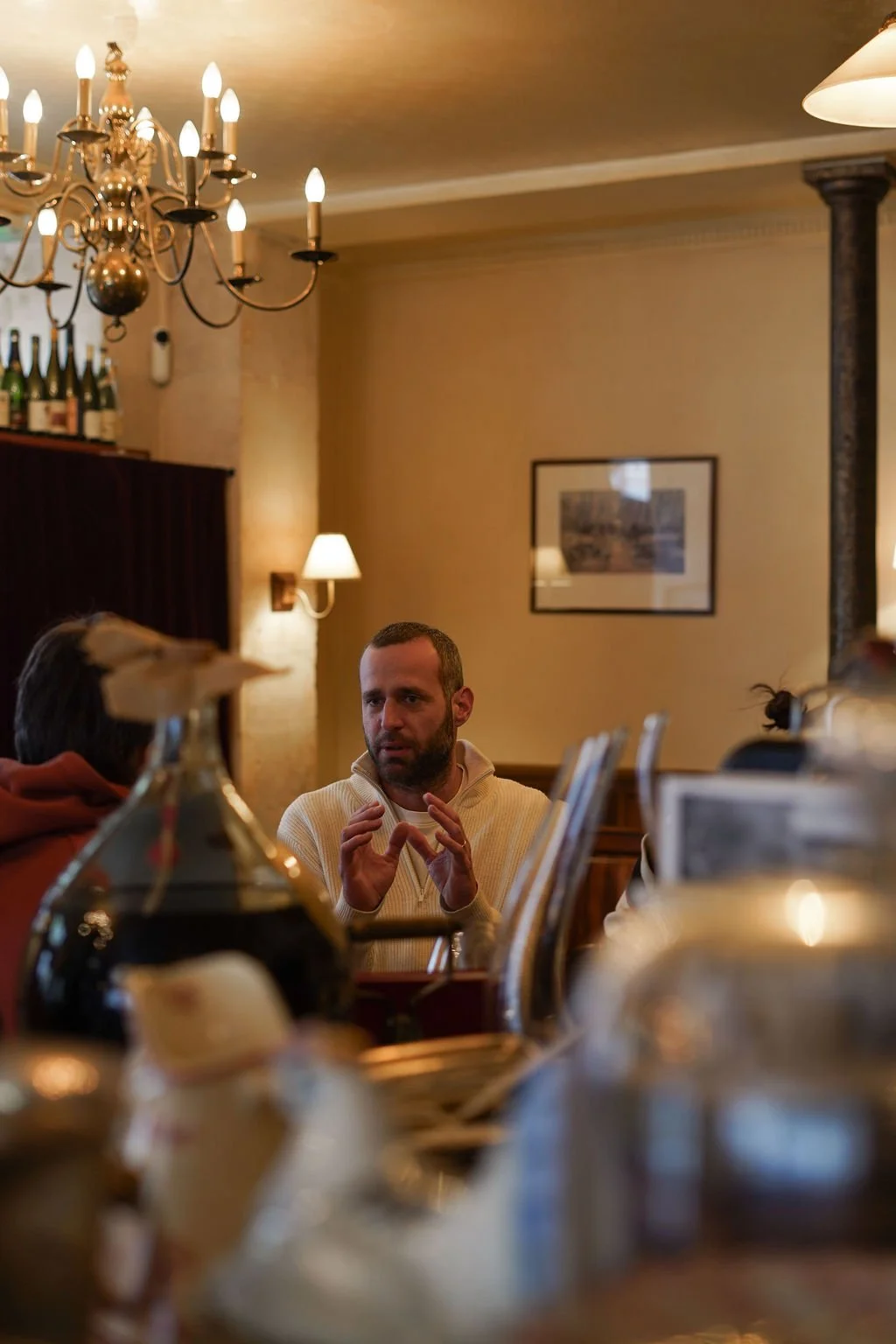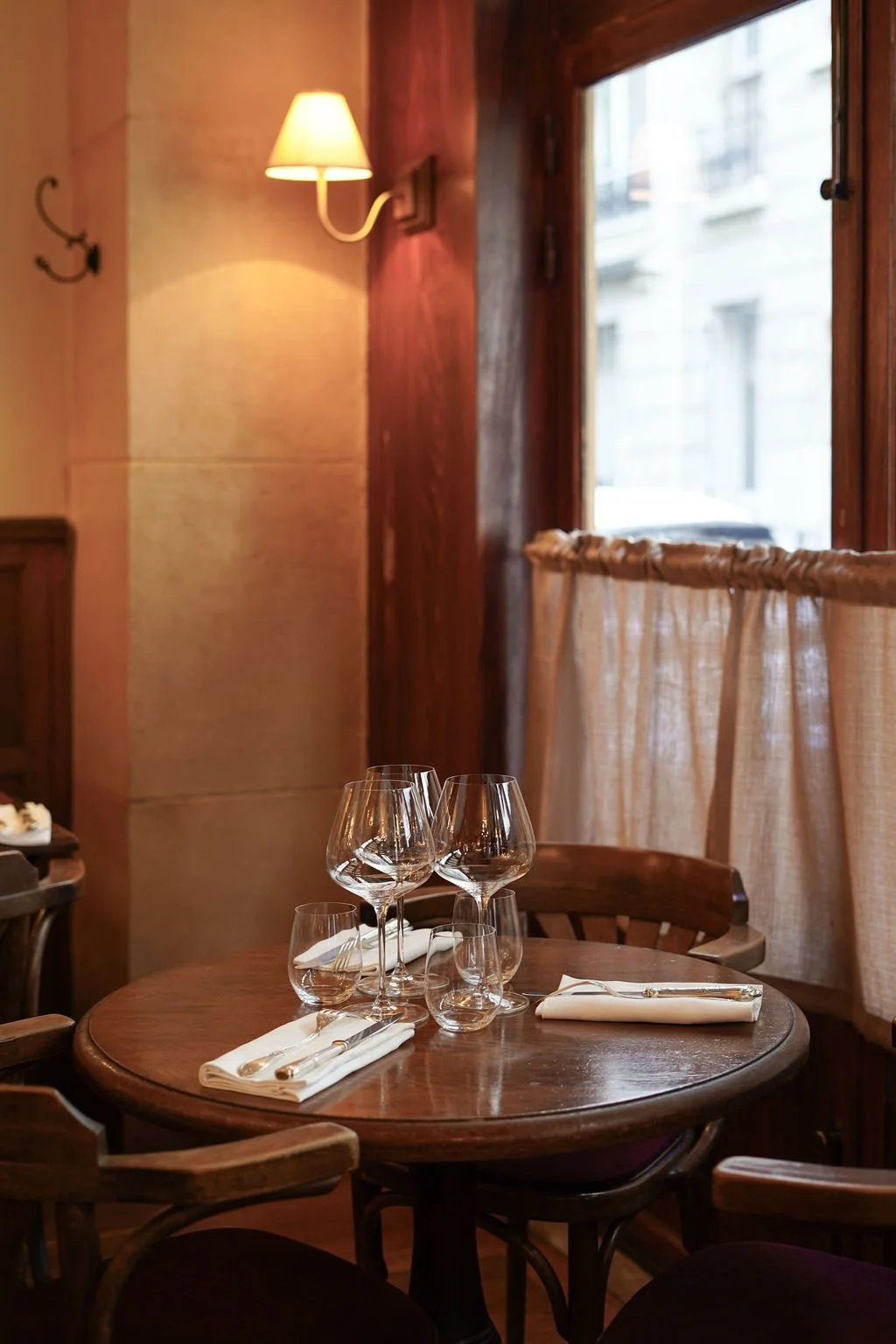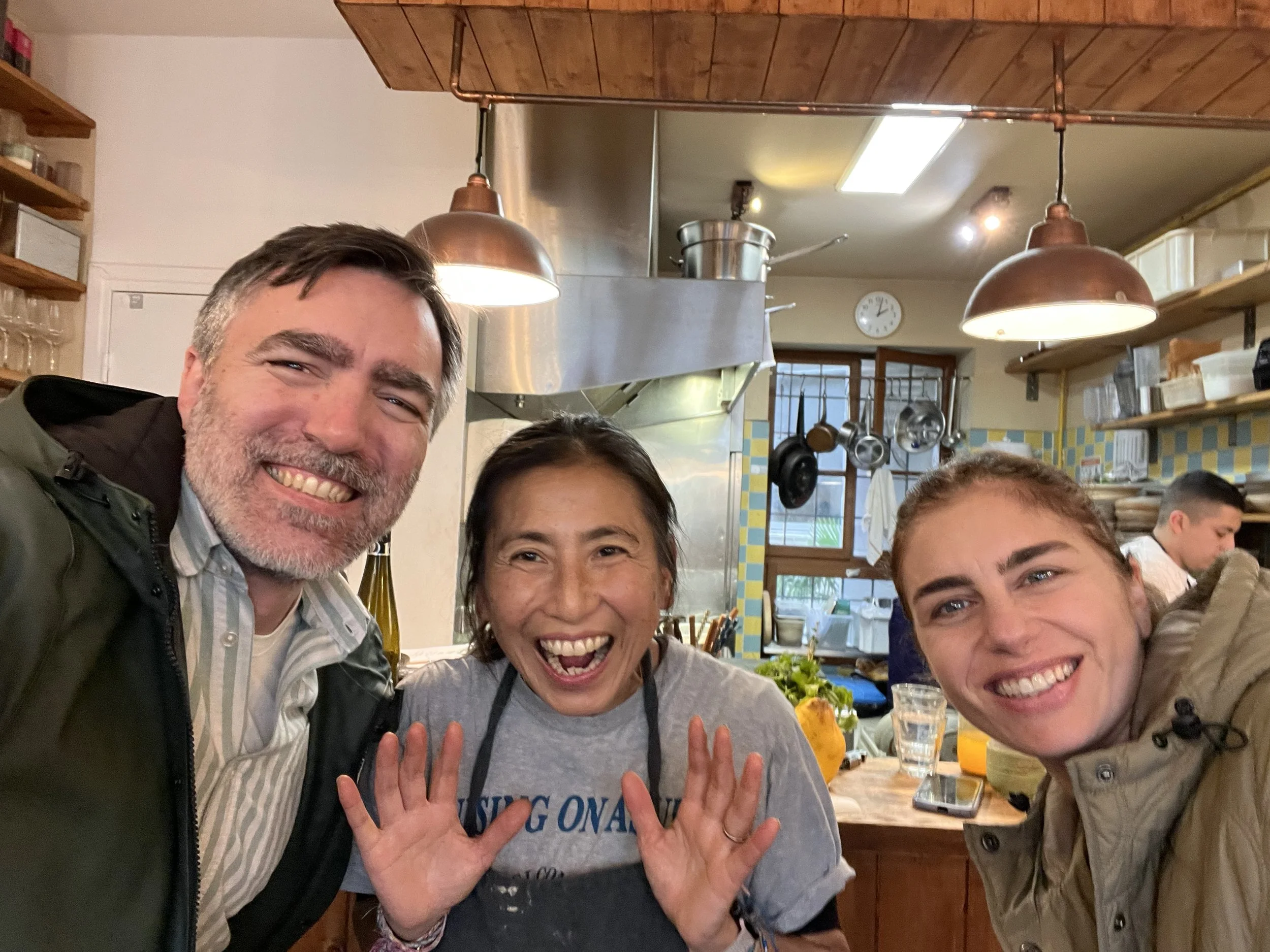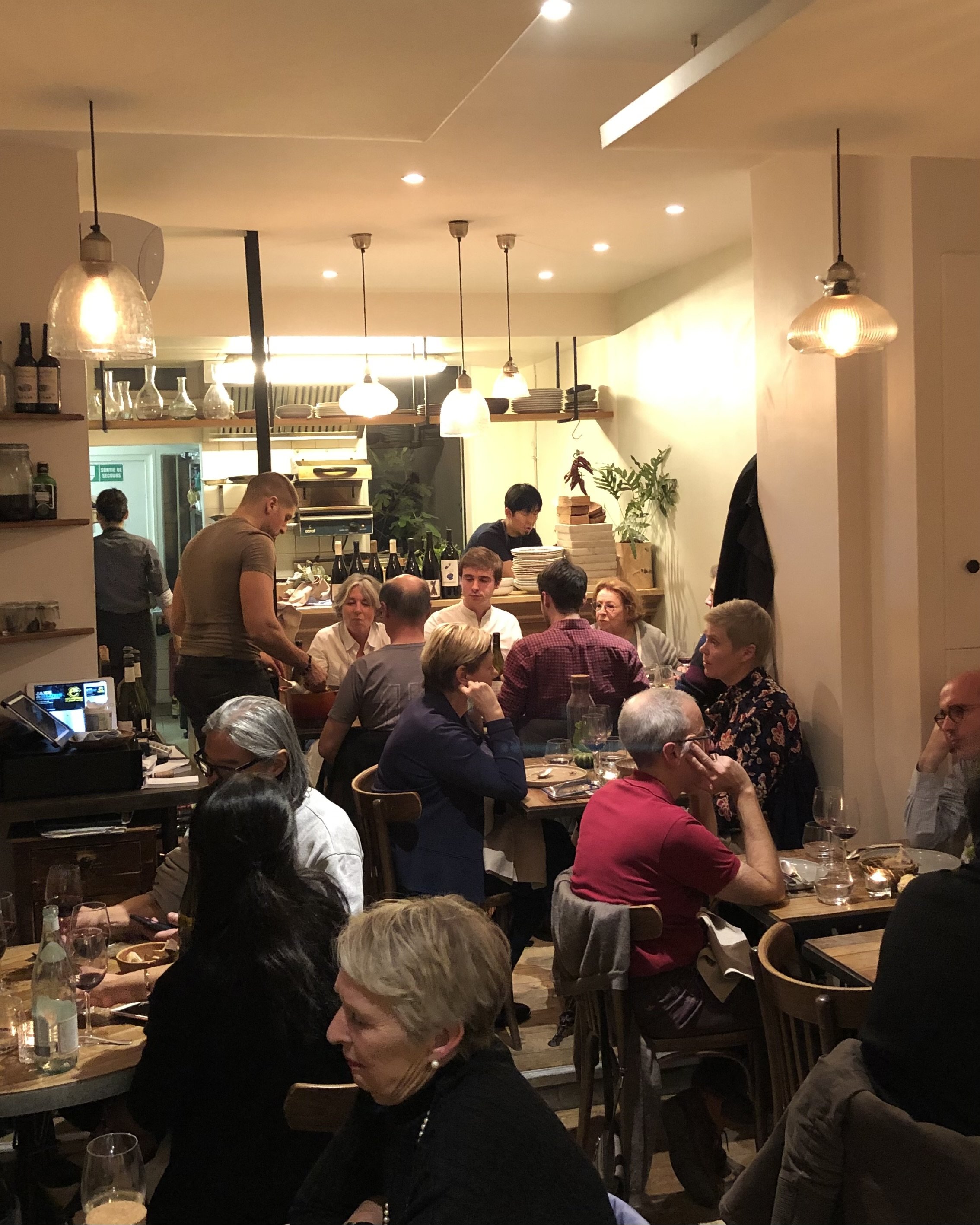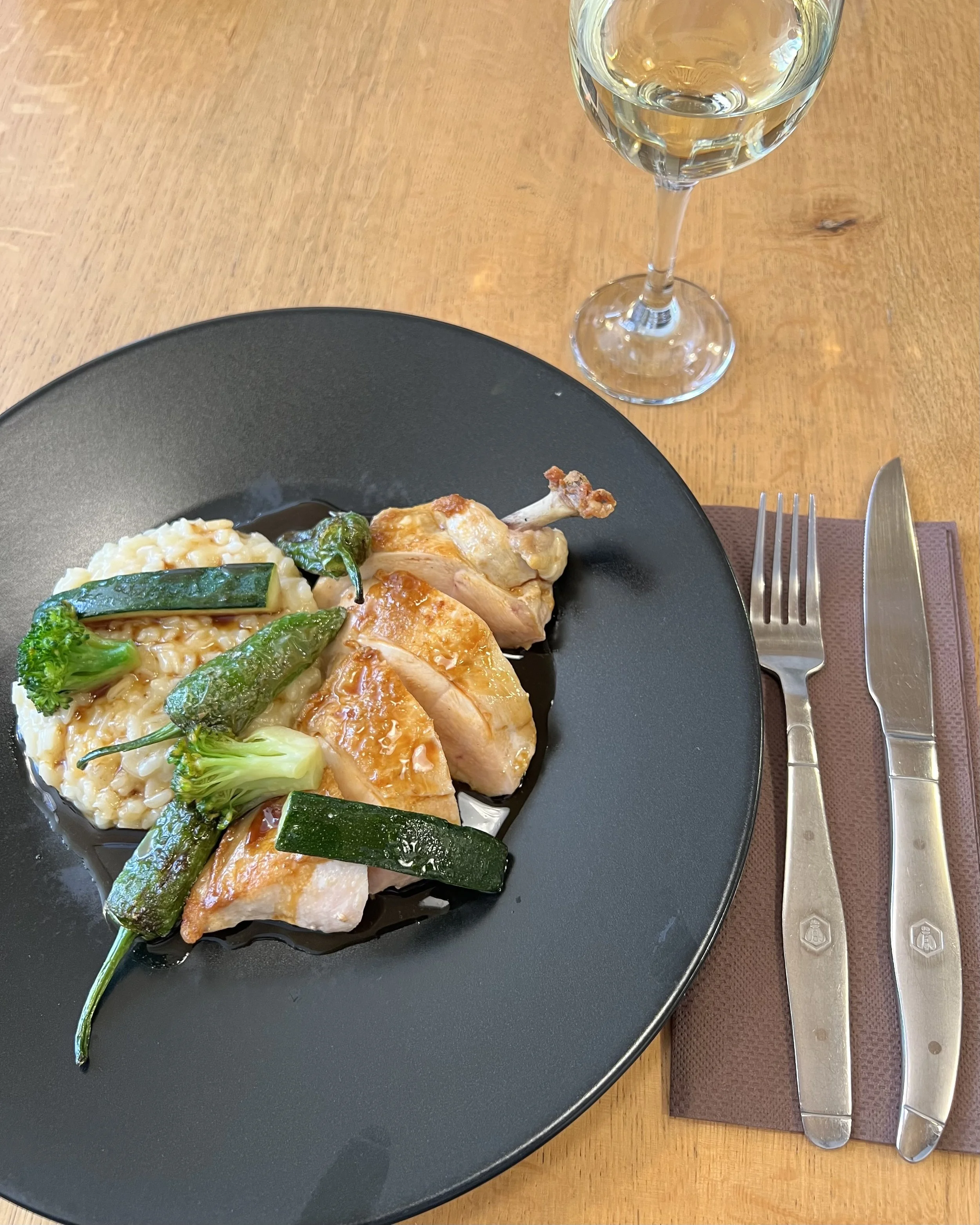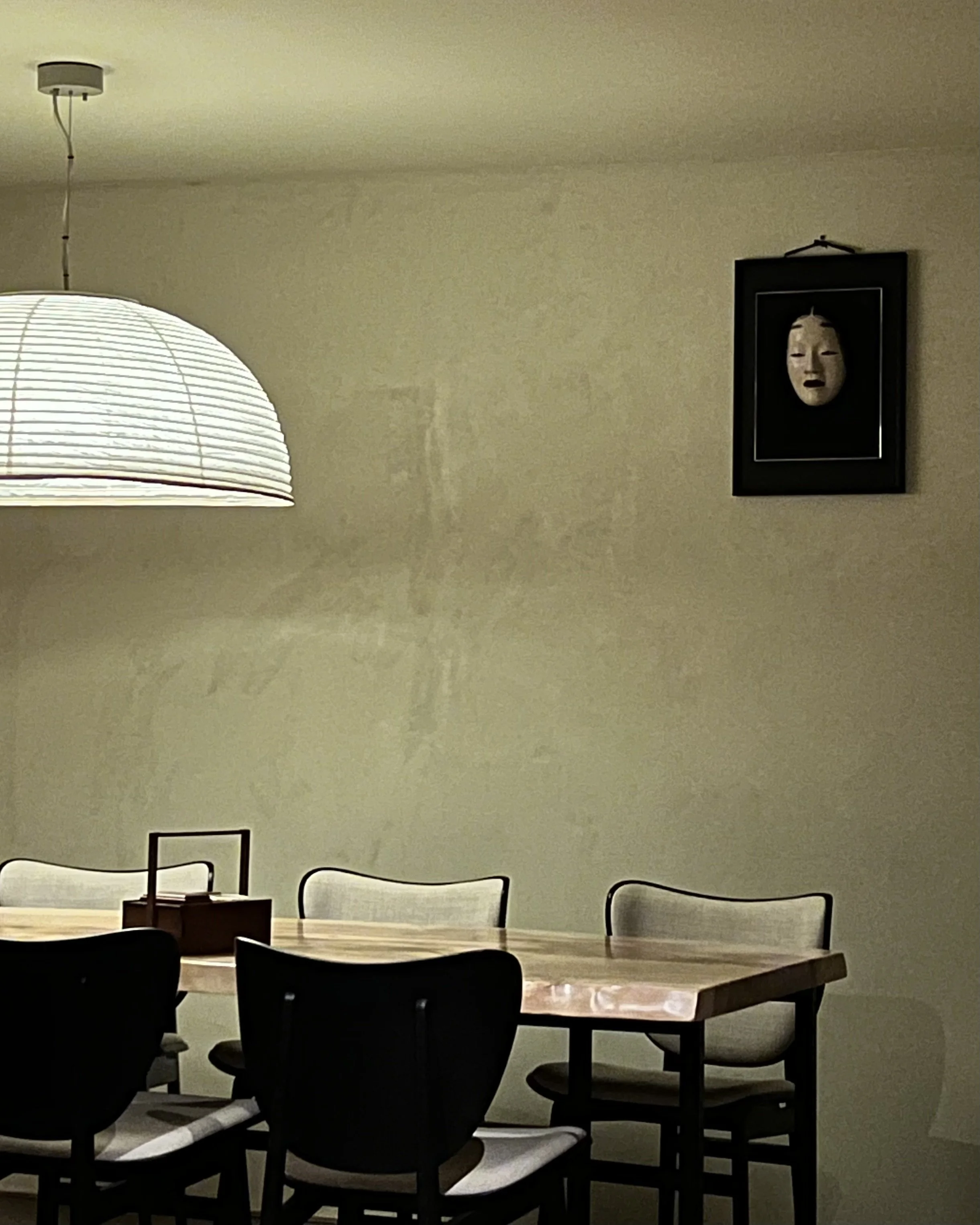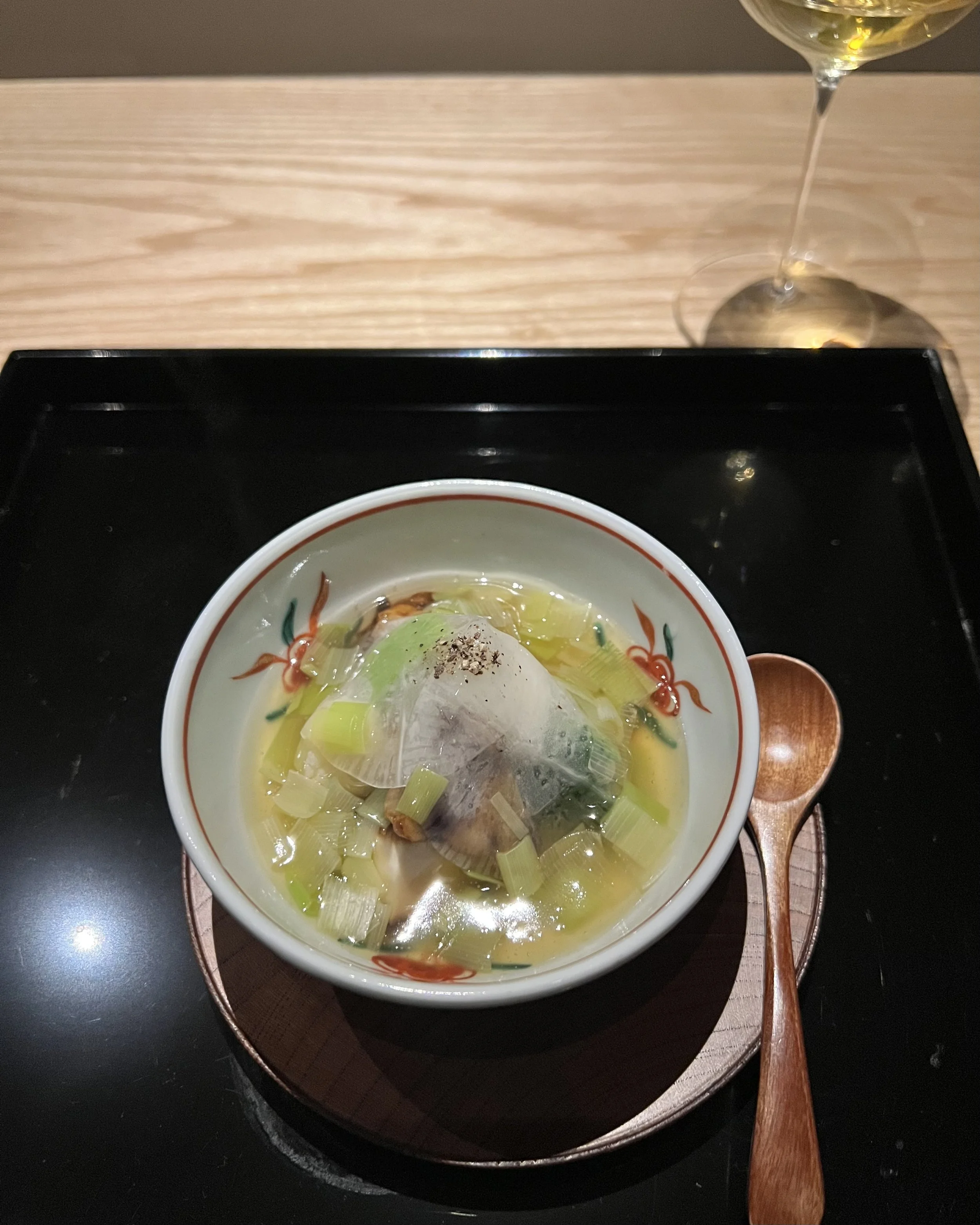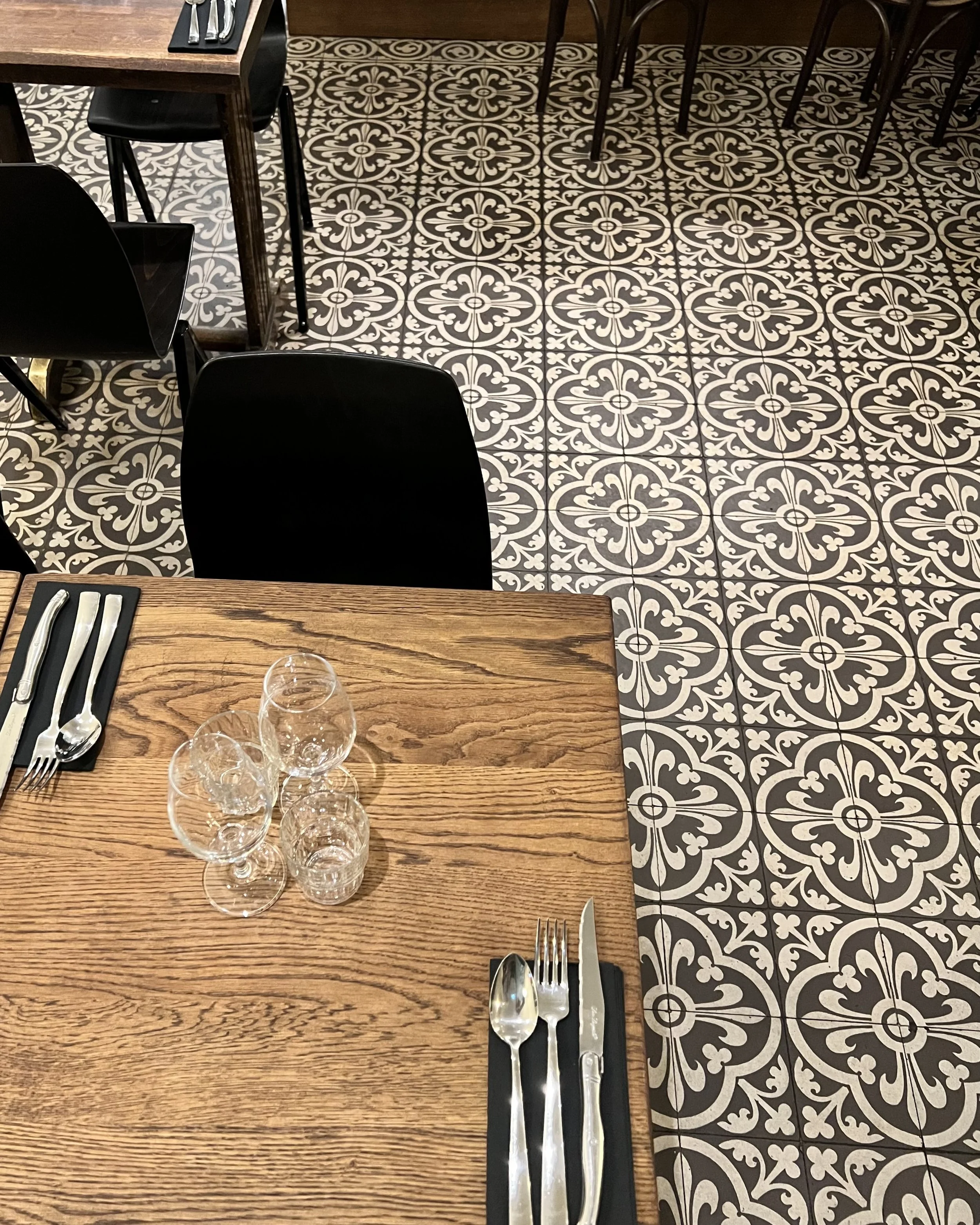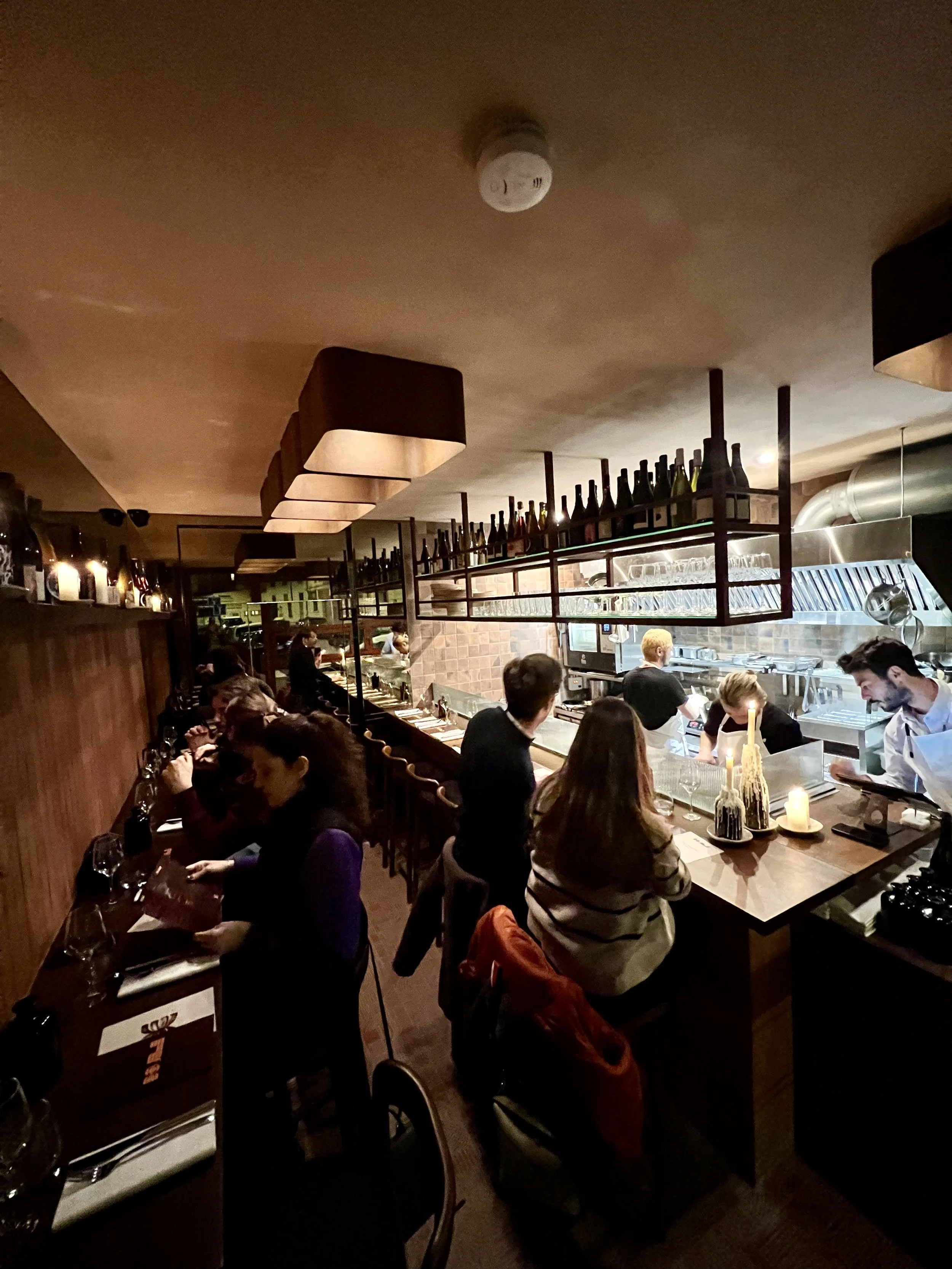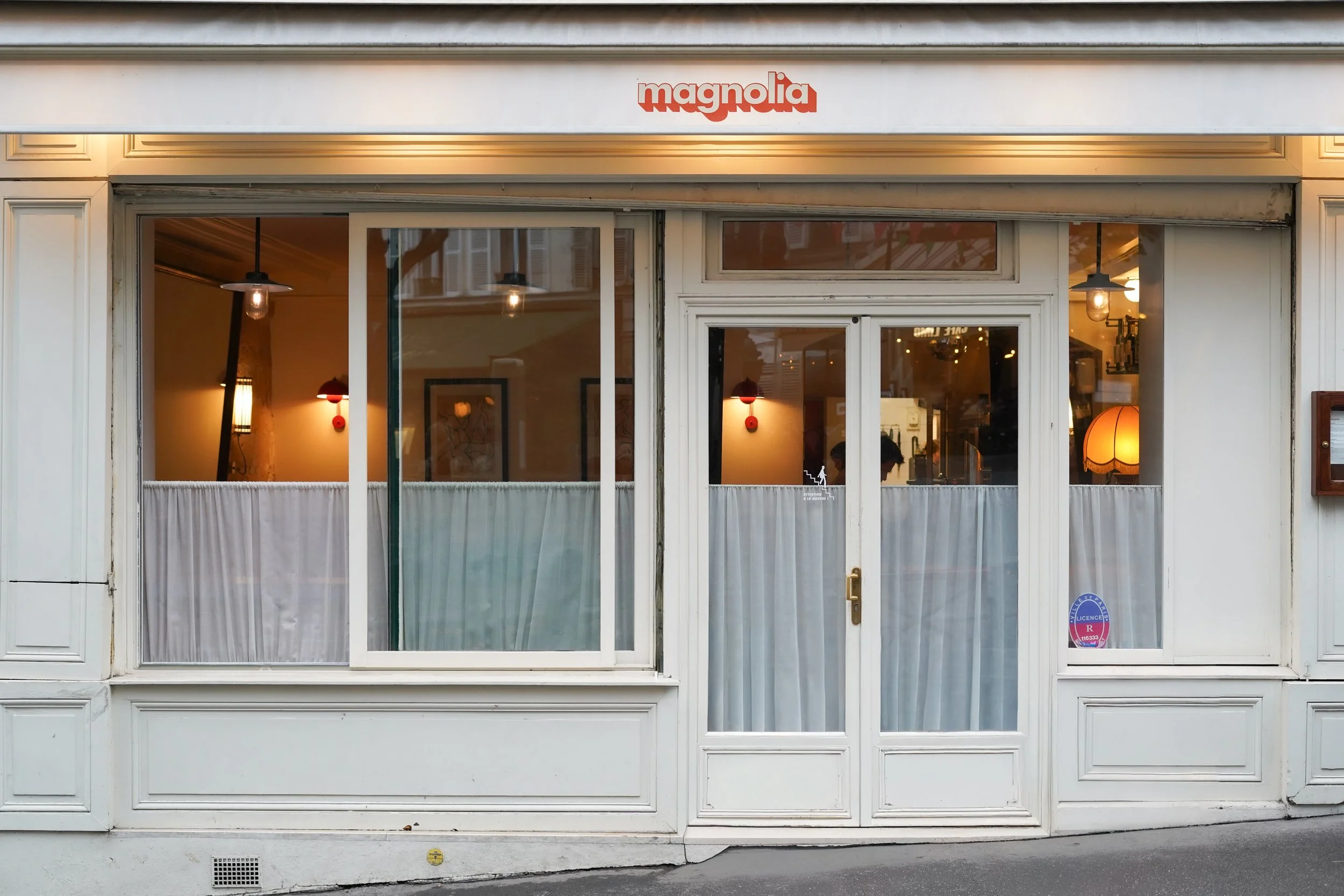
It’s becoming increasingly difficult to find restaurants where the staff don’t change all the time, where the chef is always at the helm, and where you walk in and immediately feel that warmth you’d normally associate with someone’s home or family.
Thanks to their scale, experience and expertise across different areas, large investors and restaurant groups are better equipped to adapt to economic difficulties and stay afloat. Small, independent restaurants, on the other hand, have a much harder time of it, particularly in big cities.
So when you come across independent restaurants like these, look after them. Give them a hug. I do. And Magnolia is one of the best examples of this for me.
Of course, once you get outside the big cities, it’s much easier to come across family-run restaurants and places that give you that kind of warmth. But a restaurant doesn’t have to be run by an actual family to make you feel at home. That’s precisely what makes Magnolia special to me. They may not be one family, but the atmosphere they’ve created together has that familiar warmth you find in a good family-run restaurant.
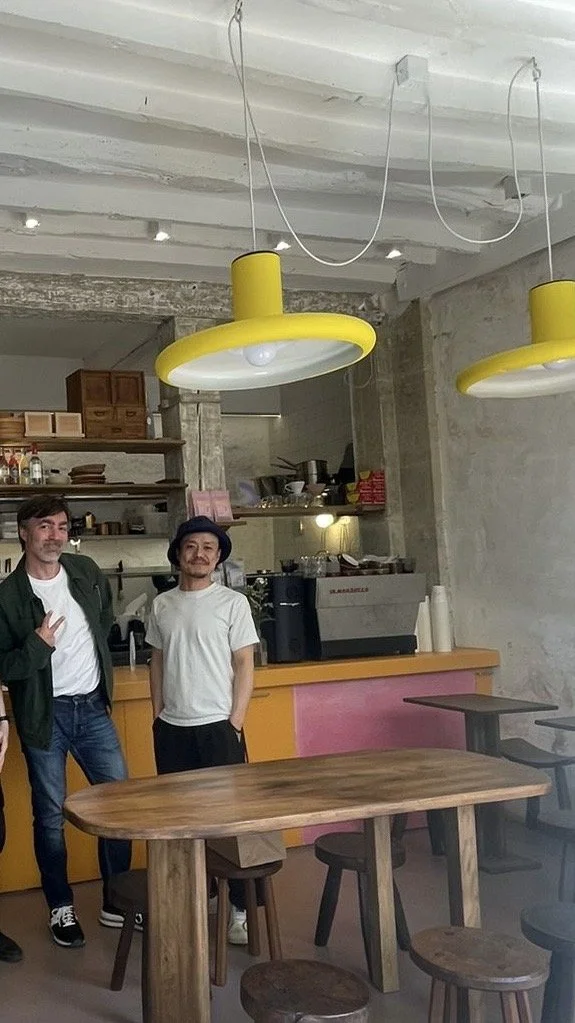
And there’s something else that makes Magnolia different: unlike a traditional family business, there are no grandparents or parents running the place. Instead, there are four young people running the show together.
Yes, perhaps Maxime Vaudin is the bravest of them all. After all, he was the one who dreamed up Magnolia and made it happen. But I’d say the other three, who joined him on this adventure, are every bit as brave.
They’re also incredibly kind. They were all happy to answer the many questions I had for each of them, without ever losing patience. Not one of them even said, “Okan, isn't that a bit too many questions?”
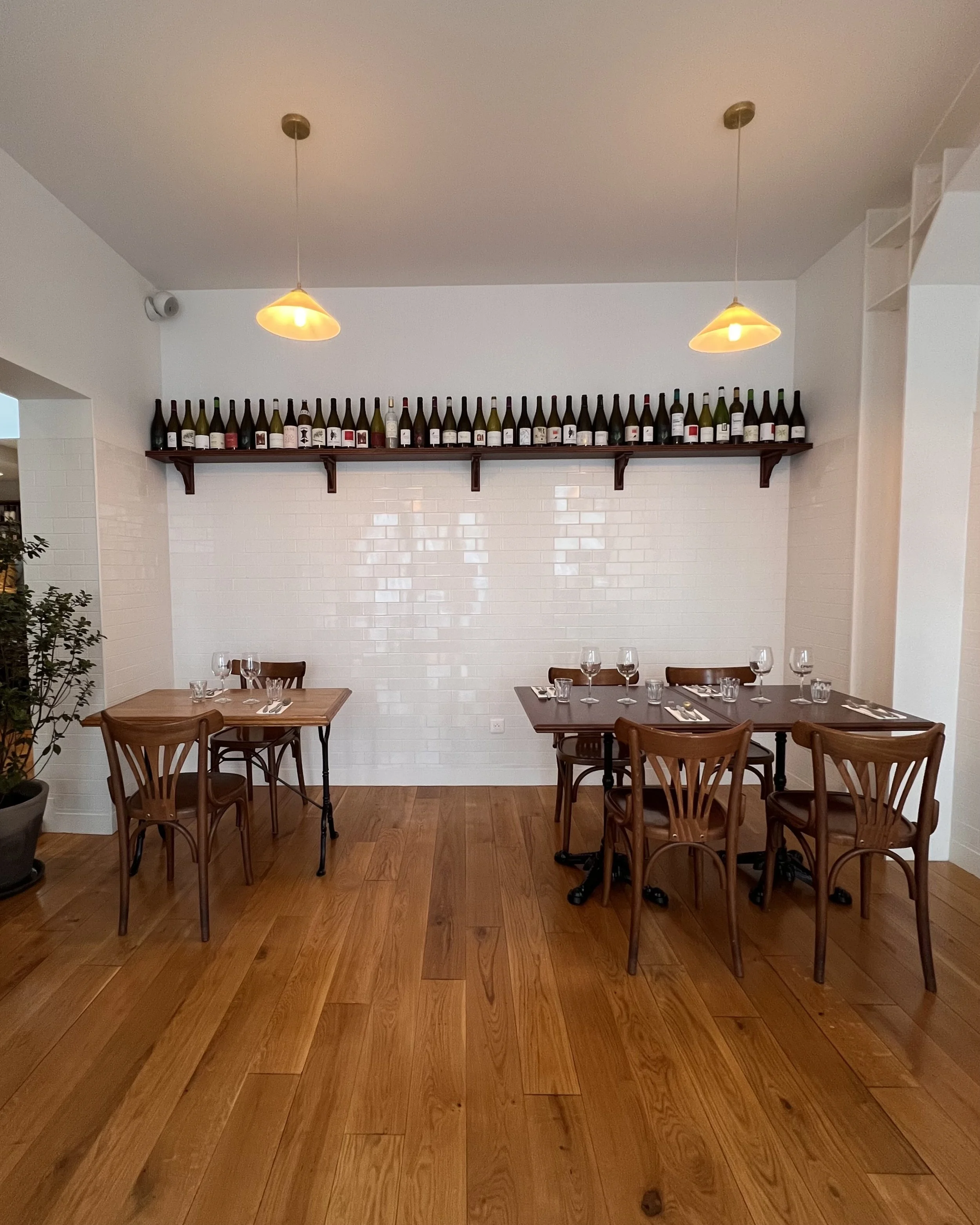
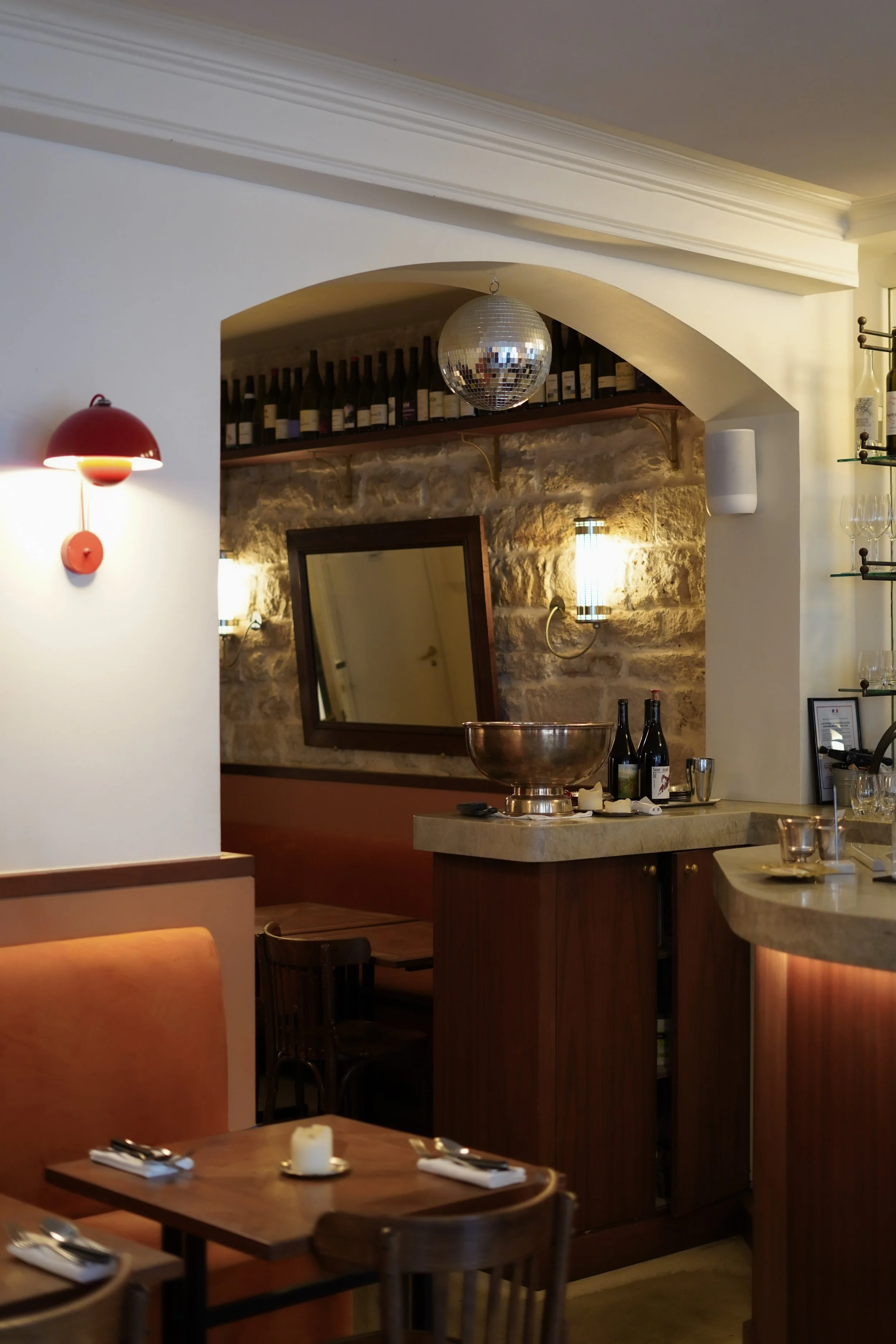
I think that their kindness and elegance are reflected in the restaurant itself.
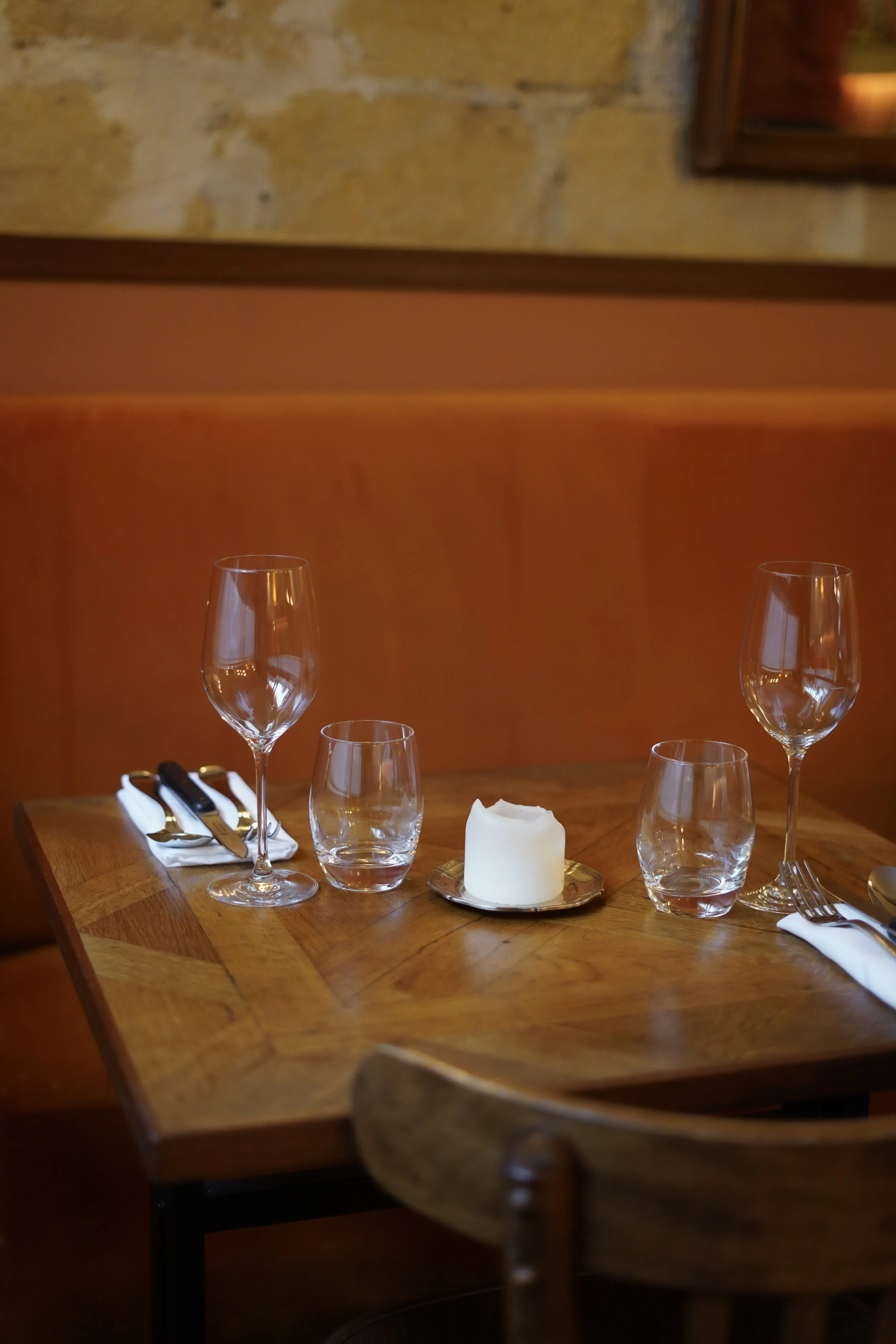
Let me tell you a little about these four. Let’s start with Maxime.
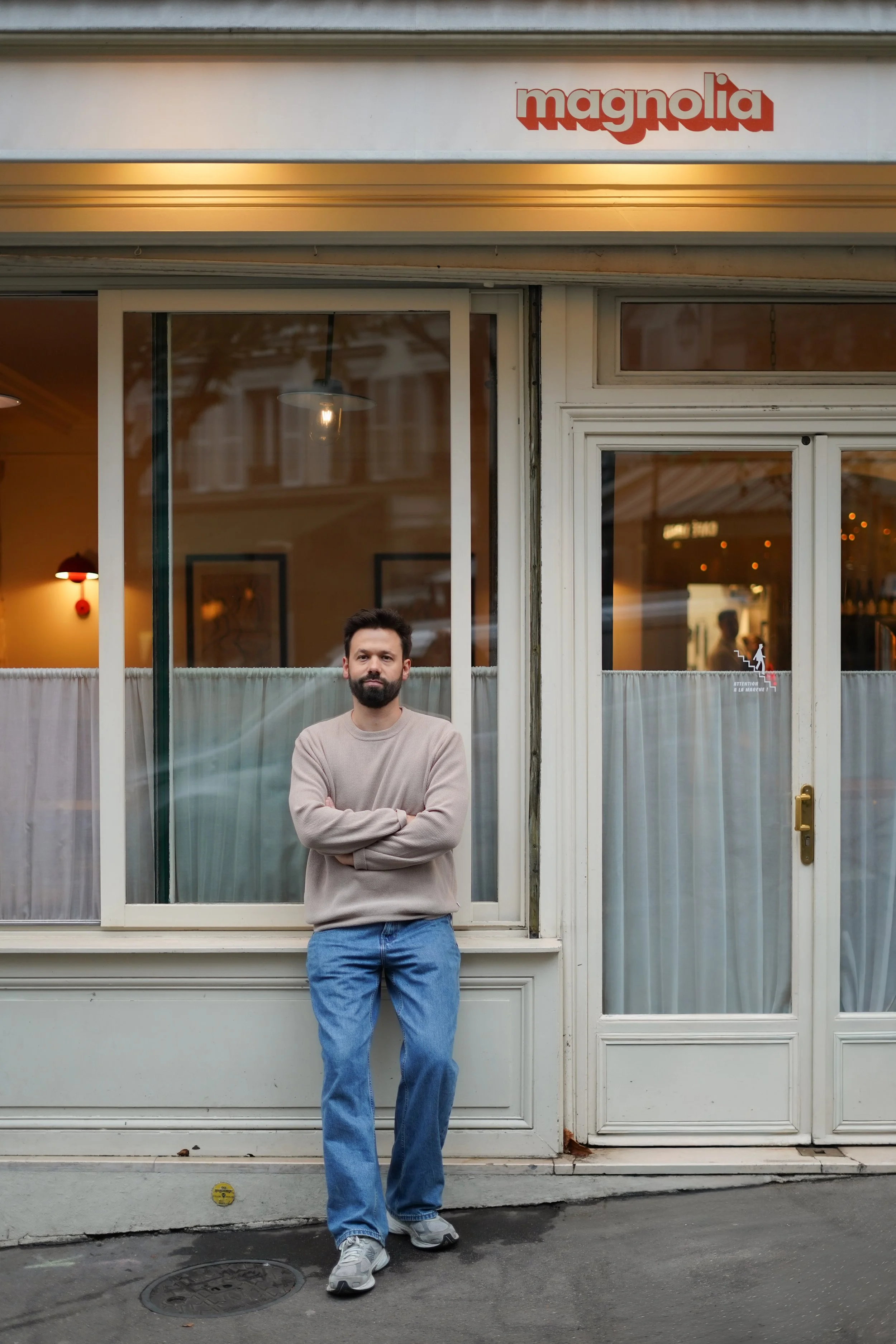
Maxime (photo by Amber)
As a child, he used to watch Les Escapades de Petitrenaud before Sunday family lunches, and loved spending time around those big family tables. Despite all that, though, he never really imagined himself running a restaurant, at least not until university. After graduating, he started working in sales for major American tech companies. He landed a pretty good opportunity early in his career, but he couldn't shake the feeling that something was missing.
Eventually, he made his move!
Maxime — In 2022, while continuing to work, I set myself the goal of getting my CAP Cuisine diploma. From the very first classes, I realised this was the path I wanted to take, and decided to open my own restaurant. I then started doing extra shifts, both front of house and in the kitchen, at restaurants run by friends of mine. Every moment I spent working in restaurants made me even more certain that I’d made the right decision.
I finally got my diploma in June 2023 and left my job in September that same year. What makes me happiest today is being able to combine two roles: being both a business owner and a restaurateur. Compared with my previous career, it’s certainly a less secure and less lucrative path, but it’s much more fulfilling. There hasn’t been a single day when I’ve regretted my decision.
When they decided to open Magnolia, they initially teamed up with British chef Jack Bosco, whose cooking I knew, liked and had been following. Although the feedback was good, Jack’s style of cooking didn't quite match the concept Maxime and Camilla had in mind for Magnolia.
Around that time, Jack was offered the opportunity to open another restaurant. The separation gave Maxime and Camilla a chance to rethink exactly what kind of restaurant they wanted Magnolia to be. Then they met American chef Noah Howell, and the foundations of the Magnolia we know today were laid.
Of course, we need to get to know Noah too. Be patient, I’ll introduce everyone! 😉
Maxime — Noah’s experience at The Ledbury, his creativity and his energy helped us achieve the elegance and refinement we were looking for in the kitchen. His approach was exactly in line with the kind of restaurant we wanted Magnolia to be. Noah also understands how important it is to keep a close eye on costs, which is a great help to me. In fact, the whole team is not only talented in their own fields, but also understands the importance of running a financially healthy business.
(I asked Maxime a slightly provocative question: when they're trying to source the best ingredients, do he and Noah ever disagree over costs? And when they do, who usually wins? Apparently, I couldn't quite get the kitchen argument I was hoping for.)
Maxime says he hasn't regretted his career change for a single moment since opening Magnolia. Discovering a new ingredient, tasting a new wine or seeing a beautiful plate come out of the kitchen gives him an indescribable amount of pleasure. The restaurant’s first anniversary celebration was particularly emotional for him. He says he’ll never forget how happy he felt that day.
I also asked Maxime what he thinks about the future of Paris’s food scene.
Maxime — I think the restaurant world will become increasingly divided. On one side, there will be restaurants capable of serving very high volumes and remaining accessible to everyone. On the other, there will be fine-dining restaurants offering customers a complete experience, where the food, service, setting and attention to detail all come together as one.
(Oooh, Maxime! So you're on the side against two-Michelin-starred Bruno Verjus, are you? Is that it? Let the controversy begin! Ahahaha. Chef Verjus did say that the era of fine dining was over, after all.)
For everyone caught somewhere in between, things are becoming increasingly difficult.
The wave of bankruptcies should be a wake-up call for public authorities, reminding them of the need to provide greater support for the traditional restaurant sector.
Today, it’s often the bistros and independent restaurants genuinely trying to do a good job that are struggling the most.
And when they disappear, we lose not only a part of our gastronomic culture, but also a part of neighbourhood life.
(100% agree.)
And for those wondering about Maxime’s favourite places to eat in Paris, let's not leave you hanging.
Maxime — For comfort food, I really love Lohan in Belleville, especially their phở. When it comes to French cuisine, I absolutely love Amarante.
For a proper neighbourhood restaurant, I’m a big fan of Dent de Loup, particularly for its lovely cuts of meat to share. And for fine dining, I really like 19 Saint Roch.
(Chef Pierre Touitou’s restaurant is one of my favourites too.)
Is there always a woman next to every successful man? (How’s that for another question designed to stir up a little controversy?) 😁
Well, in our story, there is.
Ladies and gentlemen, meet Camilla!
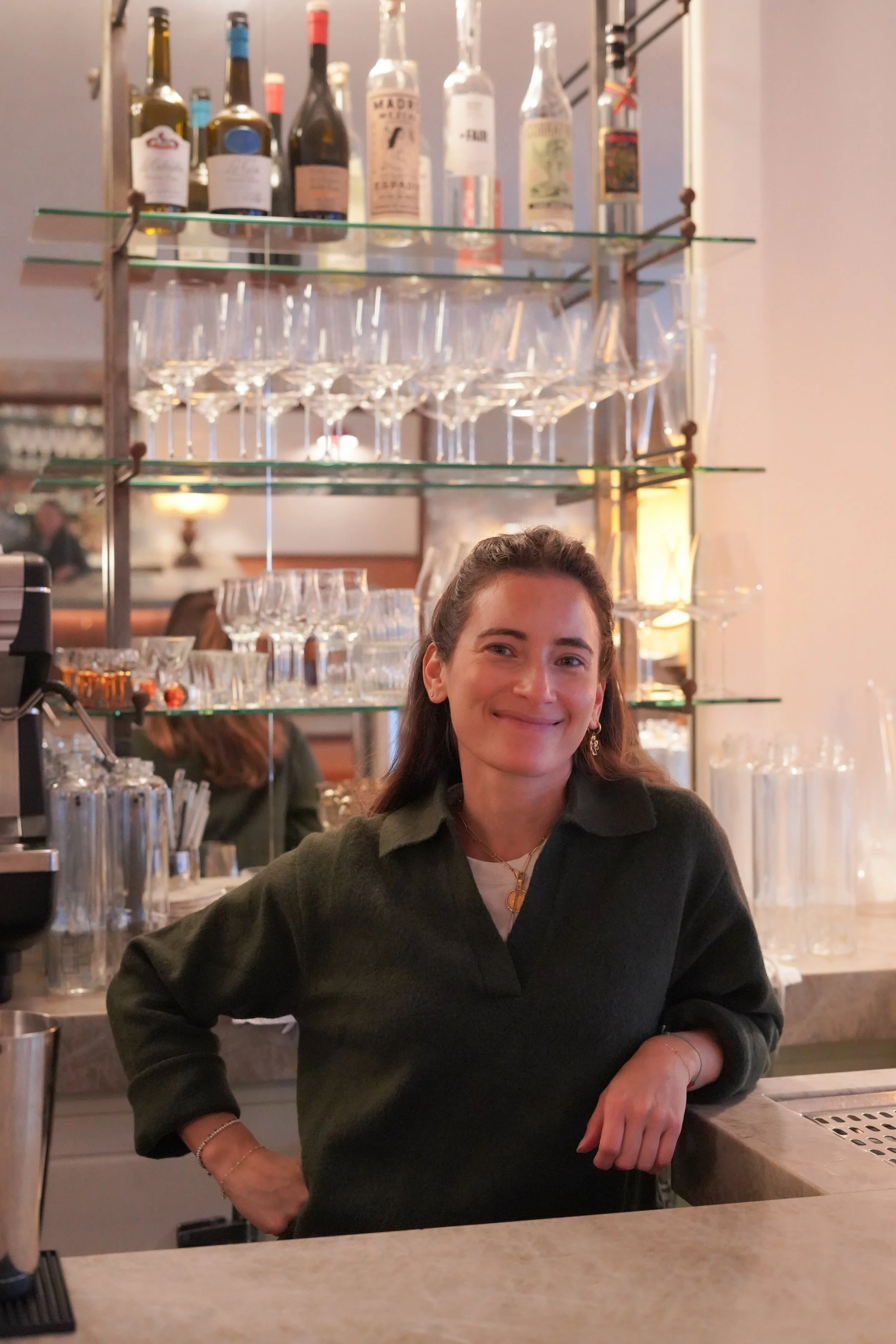
Camilla (photo by Amber)
She’s the one I’ve probably bothered the most. Whenever I had a question, needed to get hold of Maxime or tried to arrange a date for the photo shoot, she was the person I turned to. When it comes to finding quick solutions, she’s simply unbeatable.
So how did she get into all this? In Australia! And with some pretty demanding working hours, too.
She started out at Fratelli Paradiso in Sydney, one of the most respected names on the city's food scene, a real institution. Three years there was enough for her. In fact, when she returned to Paris, she was even planning to go into fashion. But how could she stay away while Maxime was trying to create such a lovely place? She jumped right into the adventure.
Camilla says she loves the adrenaline of service, the precision it requires and the repetition of all those movements. But one of the best things about the job is that every service is a different adventure. One of the moments that touched her most was when a few customers left the restaurant with tears in their eyes, thanking the team. She feels proud to have been part of a story that those guests will remember as one of the highlights of their trip to Paris. She says moments like that are an enormous reward.
Brace yourselves. Here comes the question.
Service cultures can be very different from one country to another. Have you ever had customers come to Magnolia with very different expectations of service and find themselves genuinely surprised by your approach? And when that happens, how do you stay calm and handle the situation?
Camilla — Yes, it happens. We see it particularly with customers coming from cultures where service is much more intense and showy, or, on the contrary, much more formal.
At Magnolia, we try to offer a service that is attentive but natural, warm but not intrusive. The most important thing is to understand what the customer expects and find the right balance. You have to know how to adapt while still being yourself.
I think that answer sums up Magnolia’s character rather nicely. It’s a grounded, solid and cool place.
For Camilla, hospitality means welcoming every customer as if they were coming into your own home, and taking care of the food, the service and every little detail to make sure they have the best possible time. The real art of it, she says, is anticipating what customers might need before they even realise it themselves, and making sure nothing is missing.
And now, let's talk about whether they manage to leave work at work. After all, Maxime and Camilla go home to the same place once service is over.
When things start getting a little out of control during service and Maxime has to step in, does that become a source of stress for you? And do you bring work stress home with you? 😁
Camilla — We’ve been running the restaurant for almost two years now, so entrepreneurship is still quite new to us. We’re living this adventure 10,000%, so yes, work often comes home with us… and sometimes the stress comes along too!
But as time goes by, we're learning to manage those moments better. You could say we're learning as we go, and that's actually part of what makes this adventure so exciting.
Maxime and I also complement each other quite well. He generally looks at things from a calmer, more business-oriented perspective, while I tend to focus a little more on service and the energy on the floor.
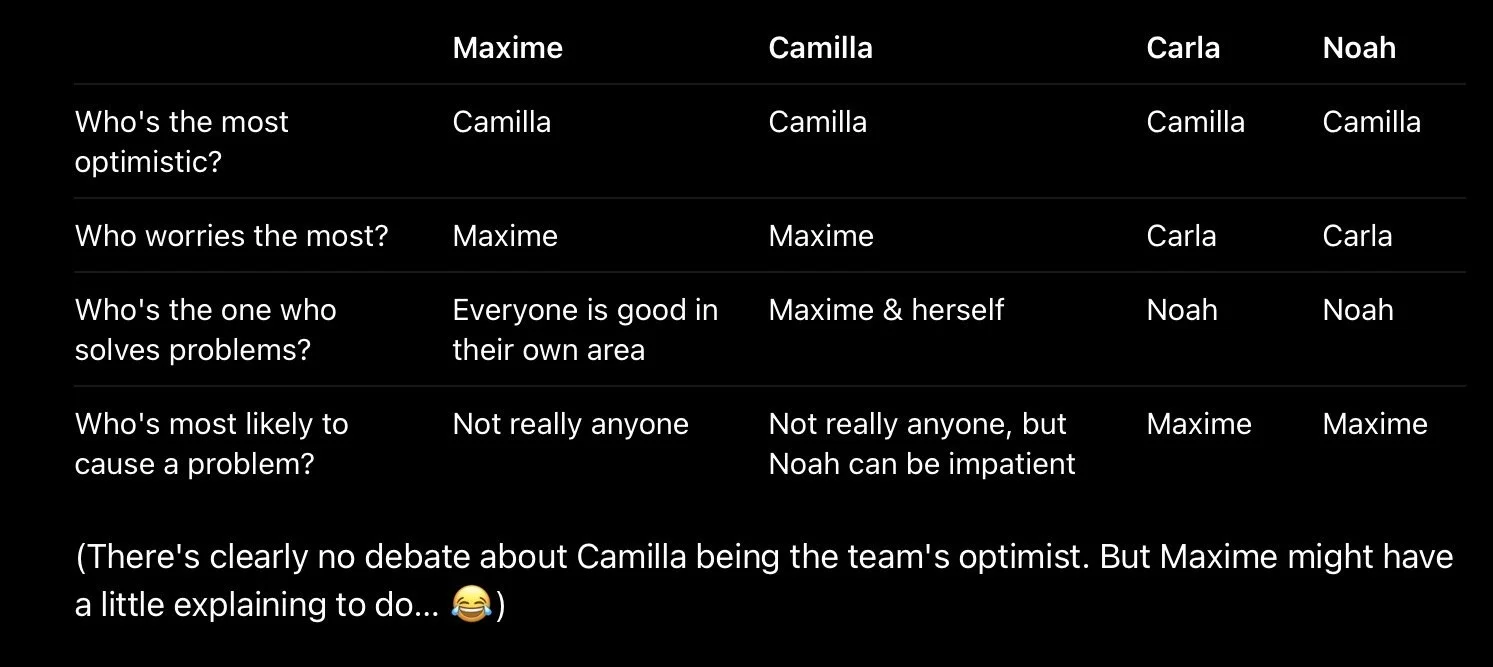
Despite all my attempts to stir things up, I couldn't get any controversial answers out of Maxime and Camilla. As you can see, they're young, but mature. Don't give up hope, though. Perhaps Carla and Noah will give me something to work with. I haven't even introduced them yet! And there's also a little Q&A table at the end, with the same questions put to all four of them. So stay tuned.
But first, let's have a look at Camilla's favourite places to eat in Paris before moving on to Carla.
Camilla — I absolutely loved Chef Nao's 228L pop-up. They're opening a restaurant in the 9th arrondissement soon, and I can't wait to check it out. The flavour combinations were bold, the plates looked beautiful, and everything was just right.
I also love Dent de Loup and Yory for lunch ❤️, Petrelle for a candlelit dinner (one of my favourites too), and Le Verre Volé for Sunday lunch.
Now, let's move on to one of the essentials of any good restaurant: a good wine expert.
Meet Carla!
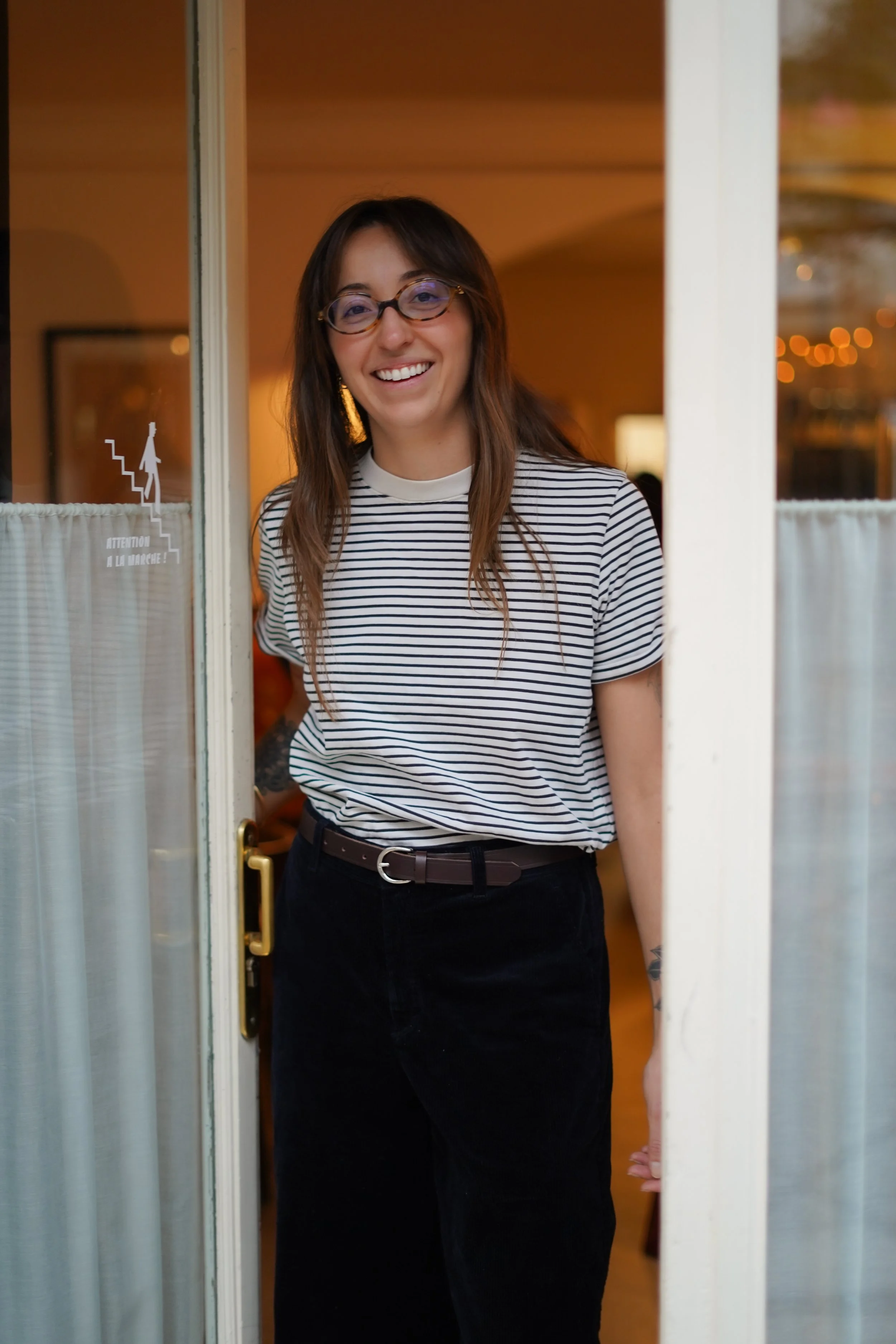
Carla (photo by Amber)
The fastest of the group. Well, the fastest at answering my questions, anyway. In fact, if I include all the interviews I've done and the writers I've featured in my guest posts, she might just be the fastest person I've ever worked with!
Carla is one of those people who used the Covid period to invest in herself and learn new things. That's when she first became interested in wine. And then her curiosity took over. She couldn't get enough: watching videos and documentaries, reading books, constantly learning. Towards the end of lockdown, at just 19, she signed up for WSET Level 1. She then went on to study for a degree in wine and spirits, hoping to turn her passion into a profession.
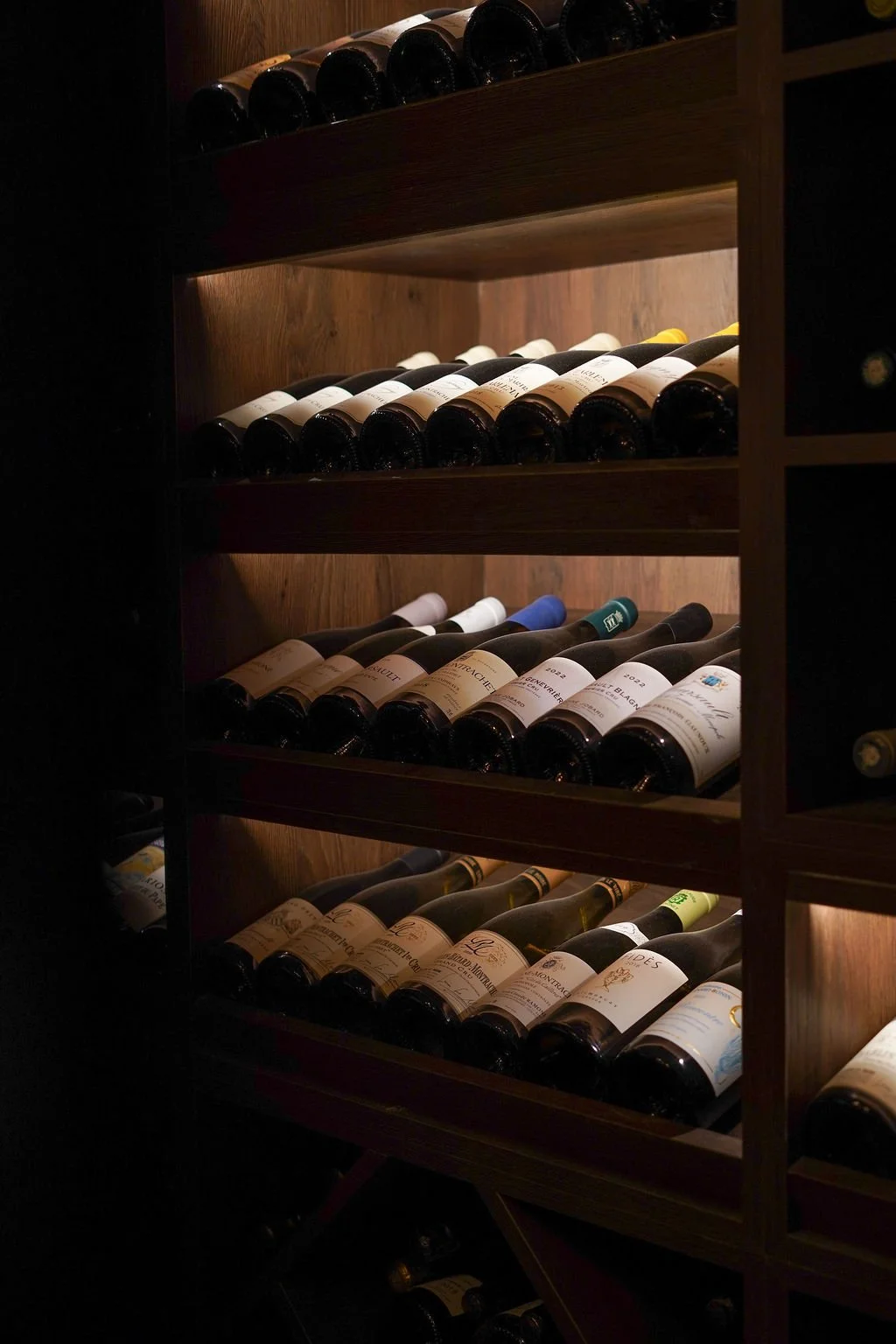
She's still at the beginning of her journey, but according to Maxime, Magnolia's ever-growing wine cellar is developing right alongside Carla's appetite for learning.
I asked Carla about the moment when her interest in wine really took a turn. You know, those wines that suddenly make you see things differently. Had she ever experienced a moment like that?
Carla — There was an evening I spent with some friends from wine school. We drank Adrien Renoir’s Le Terroir Grand Cru Verzy and a macération wine by Gérôme Bretaudeau. I was really struck by the purity and complexity of those wines. That was when I began to understand much better the difference between wines made using traditional methods and those produced with as little intervention as possible.
Carla enjoys exploring different styles. She's particularly fond of well-made wines with minimal intervention during the production process. For everyday drinking, her favourites are white wines with a saline character, a rounded texture and a long finish. Jura, southwest France, Alsace, Spain, Austria… It all depends on her mood and who she's with. She also loves drinking wine with food, which gives her the opportunity to finish a meal with something like a late-harvest wine (vendanges tardives) or an oxidative wine.
When it comes to her favourite French wine regions, she finds it difficult to choose. Jura, Alsace, Roussillon, the Loire and Savoie are the first that come to mind, but she says it's really hard to pick just a few.
Outside France, she's been particularly interested in Spanish wines lately. Whites, reds, macération, sweet, oxidative… Wines from all over Spain never seem to stop surprising her. She also loves Greek wines.
Naturally, I had to ask her about Turkish wines too! 😁
Carla — “I've tasted Turkish wines before at La Dive, and they were really good! If you bring me some more, I'd be delighted to try them.”
To all my producer friends who follow me: my DMs are open! 😁🍷
I also asked Carla about her experience working in wine production.
Carla — I spent a year taking part in a work-study programme at a small winery in the Faugères region. Being there and getting a close look at the life of a wine producer was incredibly interesting. Learning about every stage of production, seeing the unexpected situations that come up in everyday work and understanding the challenges they bring was a great learning experience.
And dear readers, the moment you've been waiting for is finally here! Carla has at last given me an answer that might actually cause a little controversy! 😂
If a winemaker you've admired for a long time offered you the chance to work together, would you consider leaving the Magnolia family for that opportunity?
(I can't just ask easy questions all the time, can I? 🤓)
Carla — Ahhh… I think I would! The opportunity to see something different and dedicate myself 100% to wine for a while is something I could really enjoy.
If the other three members of the team are reading this answer for the first time, well, that's what I call investigative journalism… Sorry, I mean writing! 😂
I also asked Carla about the relationship between Paris and wine.
What role do you think Paris plays in the development of wine culture? And how has being part of the city's wine scene influenced your own approach to wine?
Carla — We're lucky to be able to attend so many tastings in Paris and to be relatively close to a great number of wine regions. Thanks to wine fairs and professional gatherings, we often get the chance to taste different wines and talk to the producers themselves.
This also encourages people to discover new things. Paris is a very open-minded city when it comes to wine, which gives us more freedom with the restaurant's wine list. We can include different and exciting options, even among the wines we serve by the glass.
Lately, when I go out to restaurants in Paris, I find myself naturally gravitating towards white macération wines, or skin-contact wines. And I'm rather happy about that.
What's your take on this style of wine? Do you think it's a trend, or a natural evolution of wine culture? What's happening in Paris's wine scene at the moment?
Carla — I think macération wines are fantastic. They're particularly good options in restaurants because they offer so many possibilities when it comes to pairing them with food.
I don't think it's a trend. In Georgia, white grapes have traditionally been fermented with their skins, just like red wines. This method gives the wine an incredible character.
Personally, I don't think I drink enough of these wines, but I believe they definitely have their place in the wine world. As people start looking for lighter wines, macération wines can be a lovely alternative, even a good middle ground.
(Alice Freitag's book Skin Contact is a great read if you're interested in Georgian wines!)
After all that serious wine talk, I moved on to something a little more gossipy. I asked whether she and Noah bring work home with them. She said it's difficult not to, but they've somehow learned to find a balance.
I also tried to start another little controversy, but no luck again! Apparently, they rarely disagree when it comes to food and wine pairings. So who's more accommodating, Carla or Noah?
Anyway, let me introduce you to Noah first. Then we'll decide! 😉
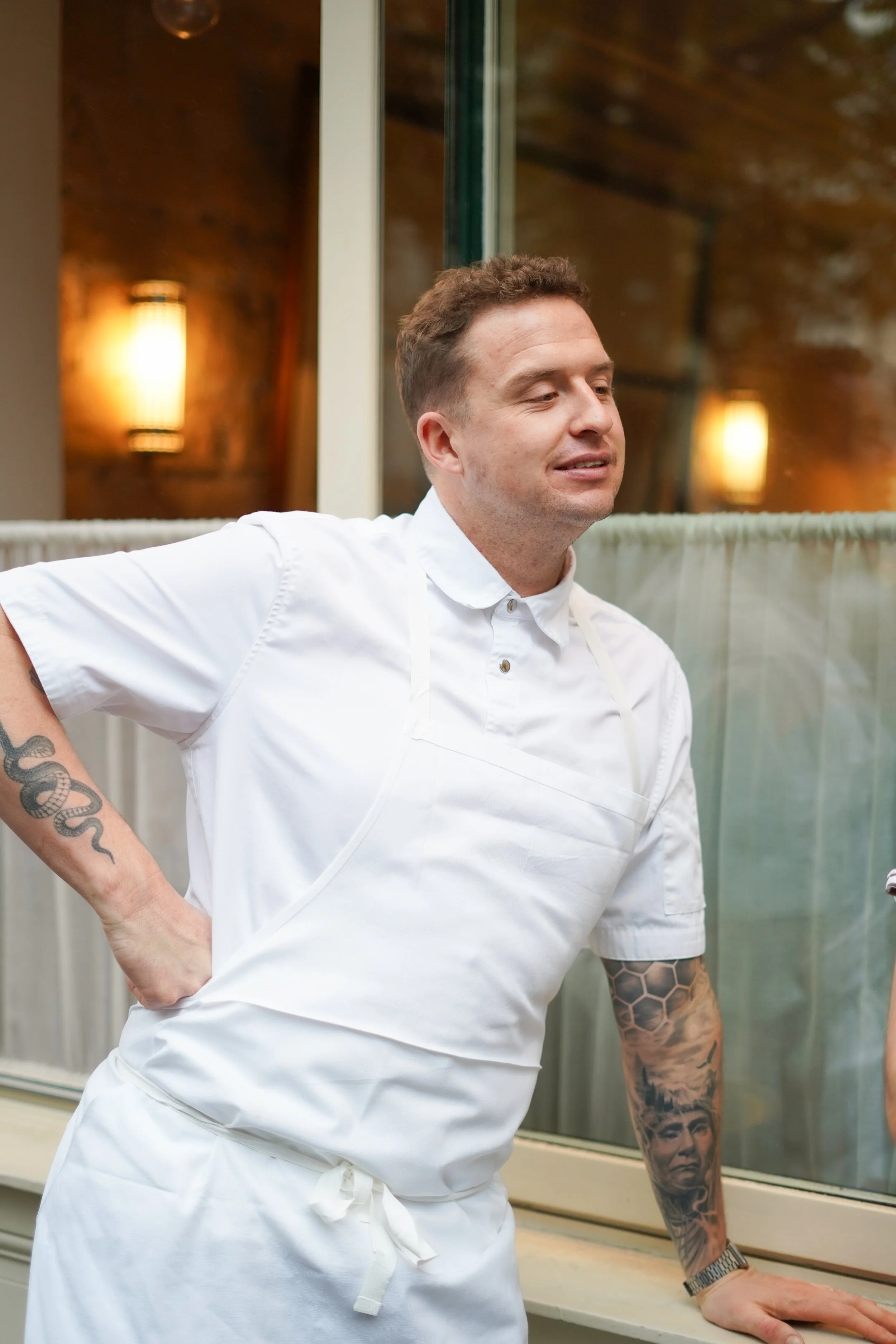
Noah (photo by Amber)
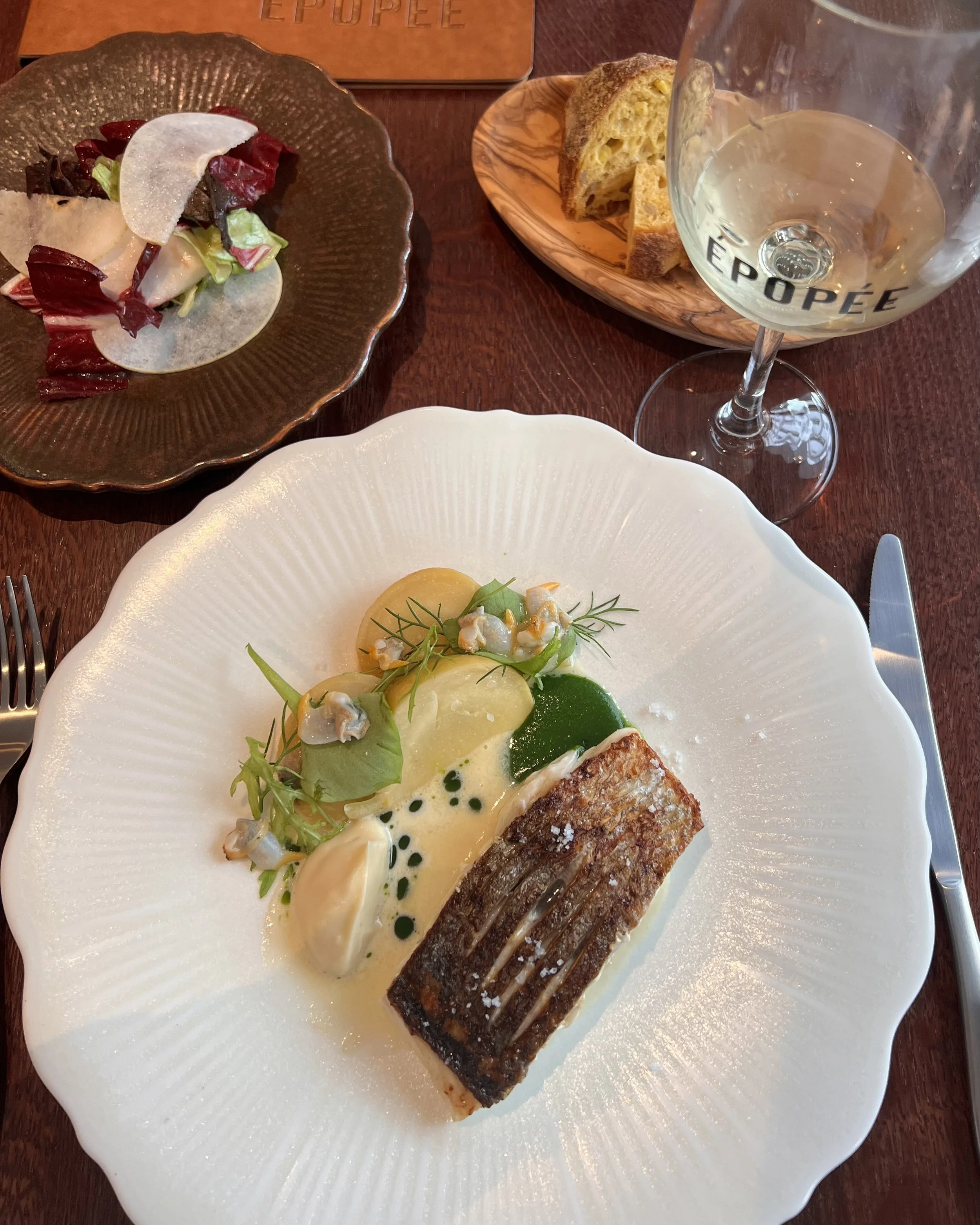
Noah is something of a key player in the team. He's the one who turns Maxime and Camilla's vision of Magnolia into actual dishes. And with Carla alongside him, the food and wine come together beautifully.
I mean, what more could a chef possibly do for a restaurant, ladies and gentlemen?!?! 😂
Noah's earliest memories of food go back to watching his mother cook. He remembers enjoying chopping things up and helping prepare dinner. He also remembers selling pizzas at his school's open day when he was just 11. He says he even enjoyed the rush of service. I guess some things are clear from an early age!
Noah was born in Kentucky, USA. And when I think of Kentucky, bourbon and barbecue naturally come to mind first. So I came up with a few either-or questions for him:
Kentucky beef or Charolais beef?
Bourbon or Breton whisky?
Burgoo or cassoulet?
And finally, Derby pie or tarte Tatin?
Noah — Kentucky beef, bourbon, cassoulet and tarte Tatin!
You can already see the balance in his cooking from these answers! Two each!
If I had to describe the balance on his plates in just two words, they would be generosity(the Kentucky side of him) and precision (the side shaped by his experience in London).
After the US, he moved to England, where he worked at Whatley Manor and then The Ledbury. These experiences taught him what a professional kitchen is really about, and the importance of discipline. In fact, by his own admission, that's when he really learned how to cook!
I was wondering what else I could ask Noah when my daughter Yasemin came up with a question of her own. I really liked it, so I'll let her take over.
Yasemin — When you're building a team that you trust enough to know a dish will be right even when your back is turned, what do you look for?
Noah — Finding the right people takes time. But if you give them a working environment where they feel safe and trusted, they'll do their best. I tend to trust people easily because I think I can quickly tell whether someone is capable of doing the job. Even so, I always do a trial before trying anything completely new.
I'd like to take this opportunity to thank my daughter Yasemin for that lovely question! ❤️
The first thing Noah struggled with when he arrived in Paris was, as you might have guessed, French.
French, French, French… Everyone's favourite little headache! 😂
So, what does he think has changed during his time in Paris?
Noah — I don't think Paris's restaurant scene has changed very much over the past three years. But I do see more chefs moving away from the harsh, raw plates associated with the St John style, and towards more refined food and technique in a more relaxed service environment. And it's exciting to see so many new restaurants opening all the time.
Of course, you've probably been wondering the same thing: why would an American chef, after working and developing his skills in London, choose not to return to a country where he speaks his native language? Why choose Paris instead of a city with such a strong food scene as New York or Chicago?
And now, ladies and gentlemen, we arrive at the most romantic moment of this whole article.
I'll let Noah give you the answer in his own words:
Noah: “I followed a beautiful girl.” ❤️
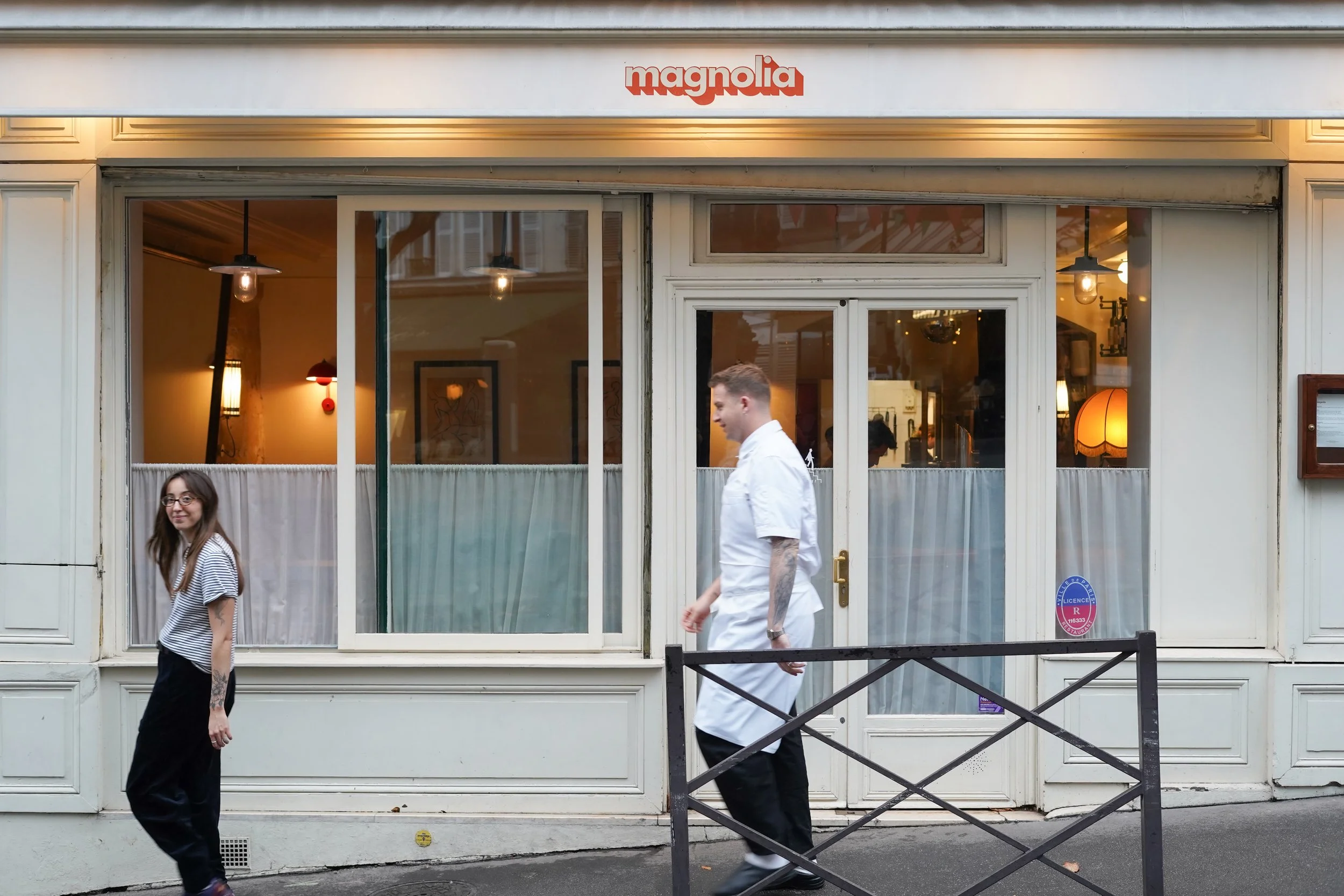
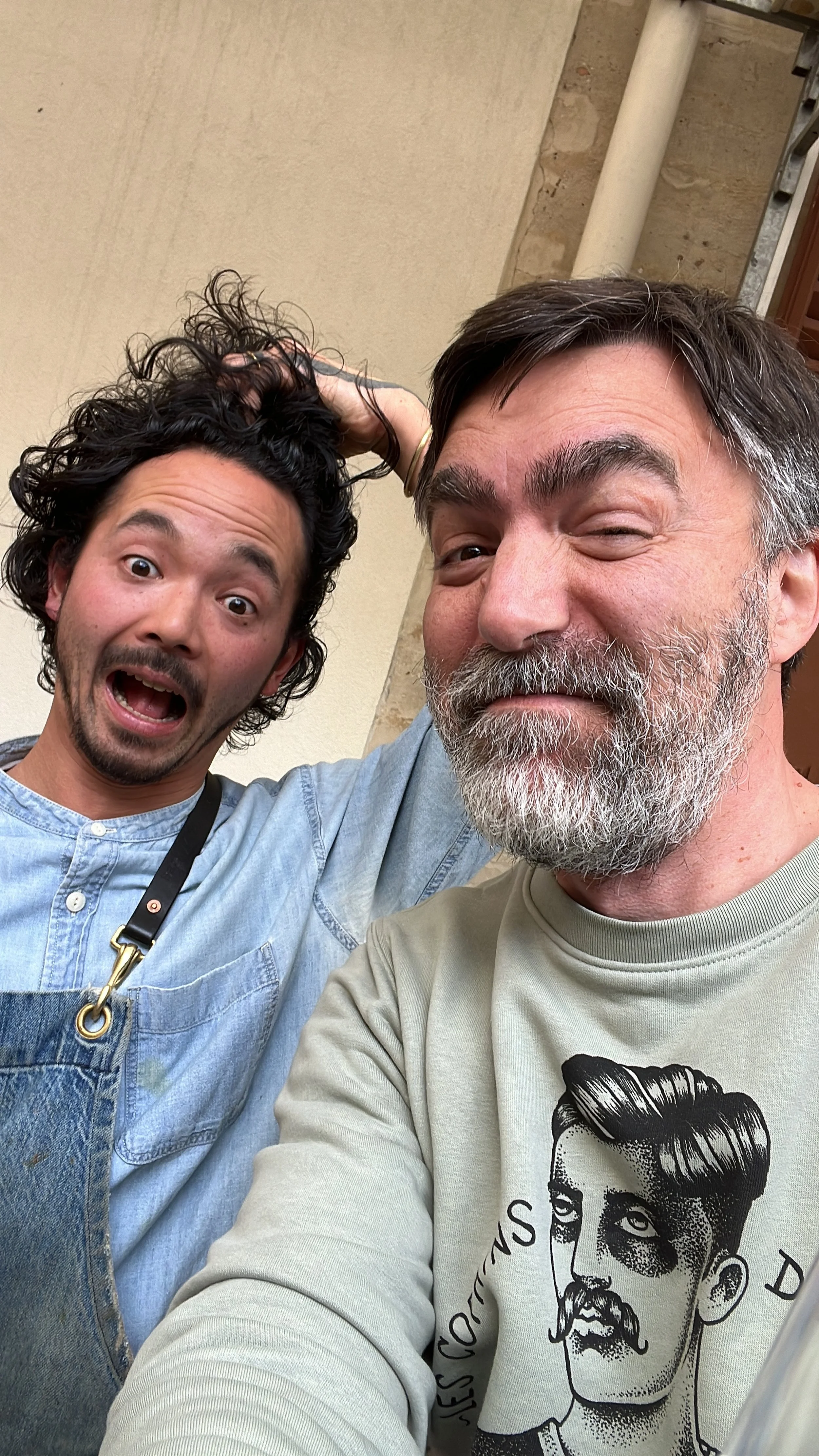
Noah: I followed a beautiful girl. (photo by Amber)
I should probably have ended the article right there.
But I also have a little Q&A table for you. I couldn't share it before introducing the whole team, so here it is. Let's see how well they really know each other!
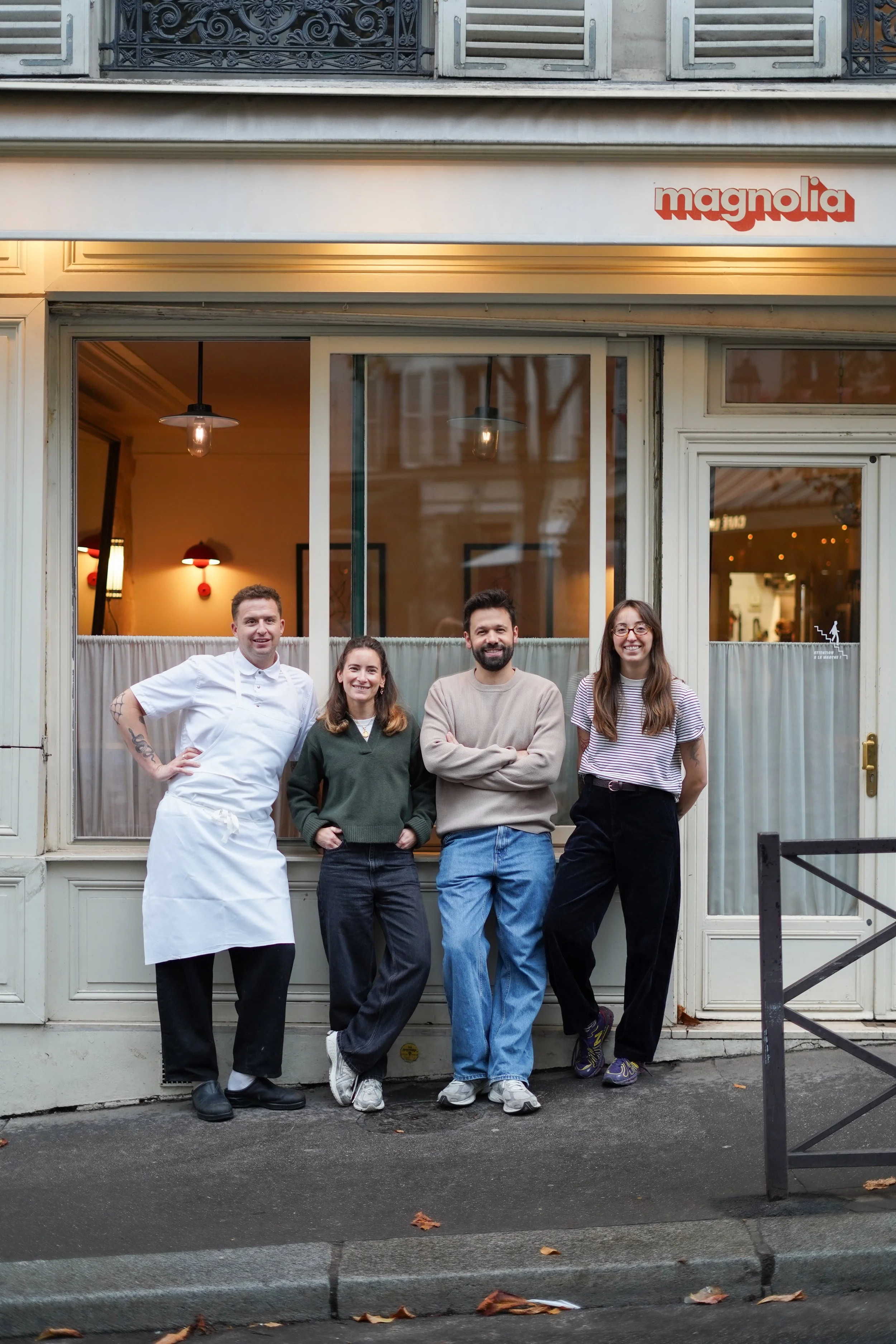
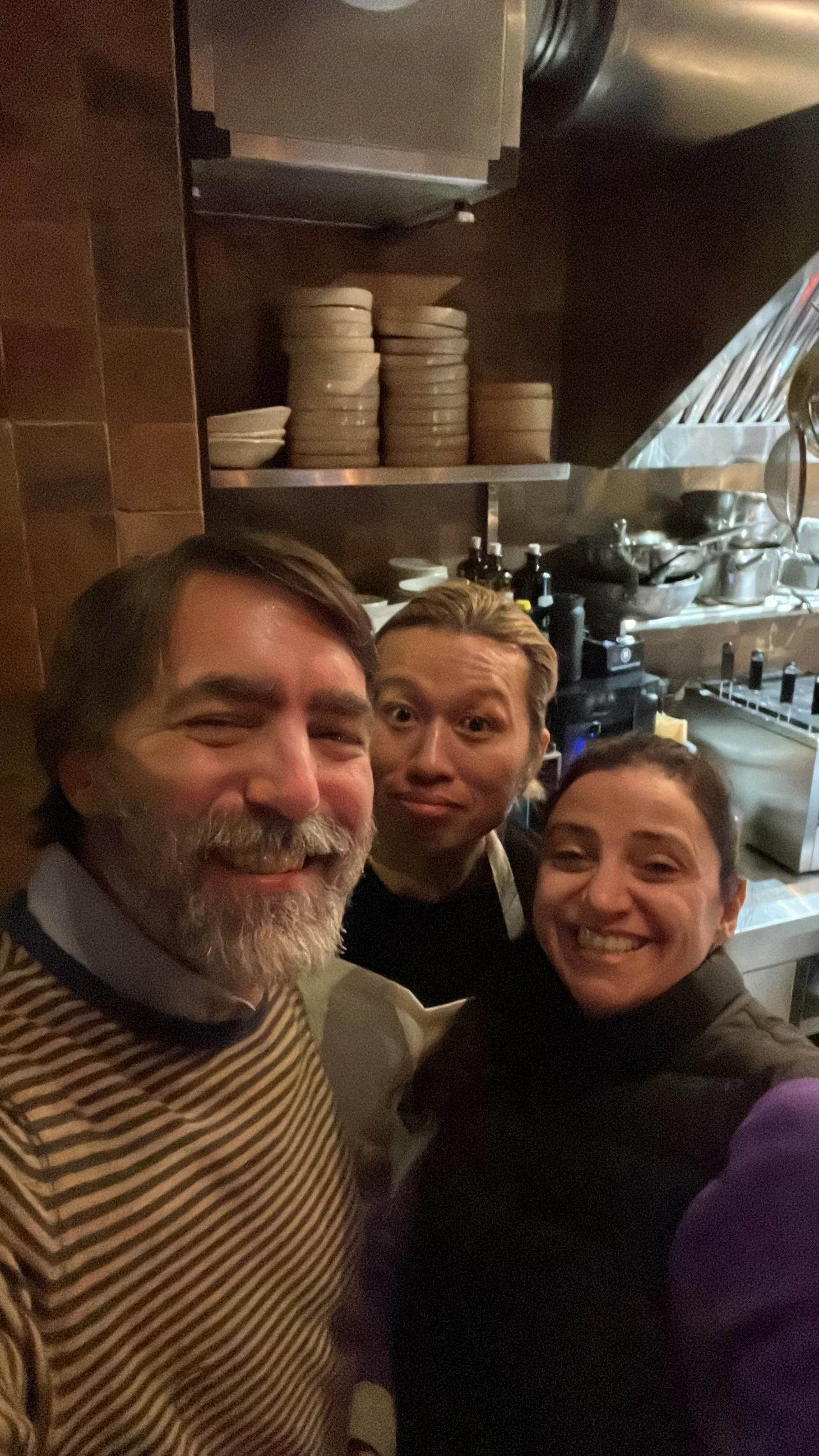
Lovely team (photo by Amber)